A smart irrigation controller rebate can reduce the cost of upgrading your sprinkler system by $50–$100 or more. Because these incentives are offered by local water utilities — not the federal government — they can be genuinely hard to find. This guide explains where to look, how to verify eligibility, and the common mistakes that keep homeowners from actually receiving the rebate they qualified for.
Key Takeaways
- Rebates are issued by your local water utility, not a state or federal program — there is no single national list to check.
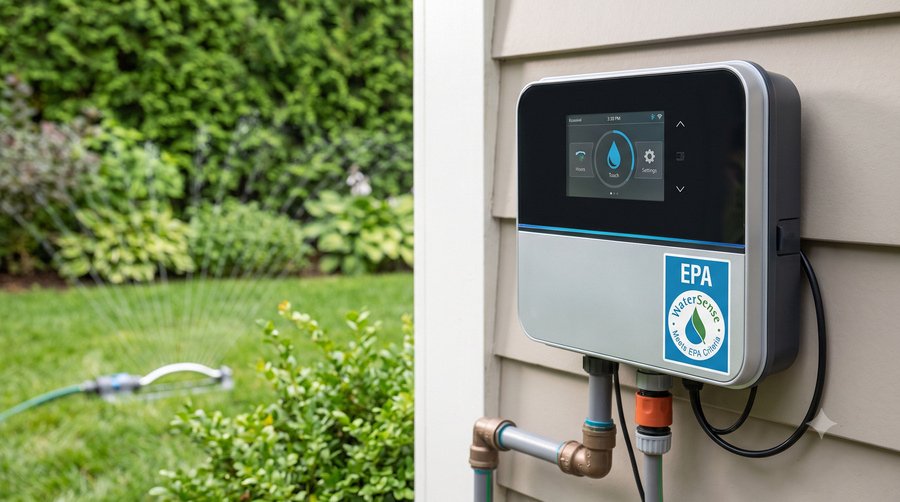
- EPA WaterSense certification is the single most common eligibility requirement across nearly every utility rebate program in the country.
- Typical rebate amounts run $50–$100 for a residential smart controller, though some utilities offer more for larger properties or multiple zones.
- Most programs require the purchase to happen before rebate approval, or within a specific window afterward — check this before you buy, not after.
- Funding is often limited and seasonal — some utilities pause their program once a yearly budget is exhausted, so timing matters.
Why utilities offer these rebates in the first place
This isn’t goodwill — it’s cheaper than the alternative. According to the EPA, outdoor water use accounts for about 30% of average household water use nationwide, and replacing a standard clock-timer controller with a WaterSense-labeled smart controller can reduce irrigation water use by up to 30%, saving an average home up to 15,000 gallons annually. For a water utility, subsidizing that reduction in demand is routinely cheaper than the alternative — expanding treatment and supply infrastructure to meet peak summer irrigation demand. That’s the actual economic reason these rebates exist, and why they’re funded at the utility level rather than nationally. (Source: EPA WaterSense Statistics and Facts)
How to actually find your rebate
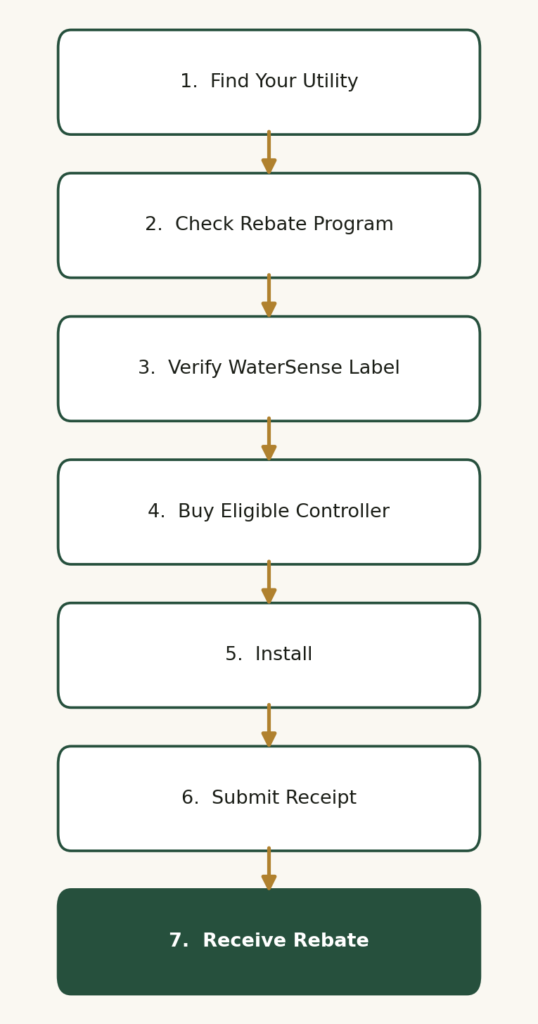
- Search “[your water utility name] smart irrigation rebate.” Your water bill has your utility’s name on it — start there rather than searching your city name generically, since rebate programs are run by the utility, not the municipal government in many areas.
- Check the EPA WaterSense rebate finder. The EPA maintains a directory of WaterSense-related rebate and incentive programs by region, which is the closest thing to a centralized, currently-accurate source: epa.gov/watersense/rebates.
- Confirm the controller is WaterSense-labeled before buying, not after. This is the single most common eligibility requirement, and buying a non-labeled model can disqualify you even if every other requirement is met.
- Read the fine print on timing. Some programs require pre-approval before purchase; others accept a rebate application with a receipt after the fact but only within a 30–90 day window. Missing this window is the most common reason people lose out on an otherwise-qualifying rebate.
- Check for a professional installation requirement. A few utilities require the controller to be professionally installed to qualify, particularly for larger multi-zone commercial-adjacent systems — most residential DIY installs are fine, but it’s worth confirming for your specific program.
- Look for a separate irrigation audit incentive. Some utilities bundle the controller rebate with a larger “irrigation efficiency” incentive that also covers drip conversion or a professional system audit — worth asking about even if you only came in for the controller rebate.
Typical rebate requirements at a glance
| Requirement | Usually required? |
|---|---|
| WaterSense certification | ✅ Yes |
| Original purchase receipt | ✅ Yes |
| Being an active customer of the utility | ✅ Yes |
| Completed application form | ✅ Yes |
| Professional installation | Sometimes |
| Pre-approval before purchase | Sometimes |
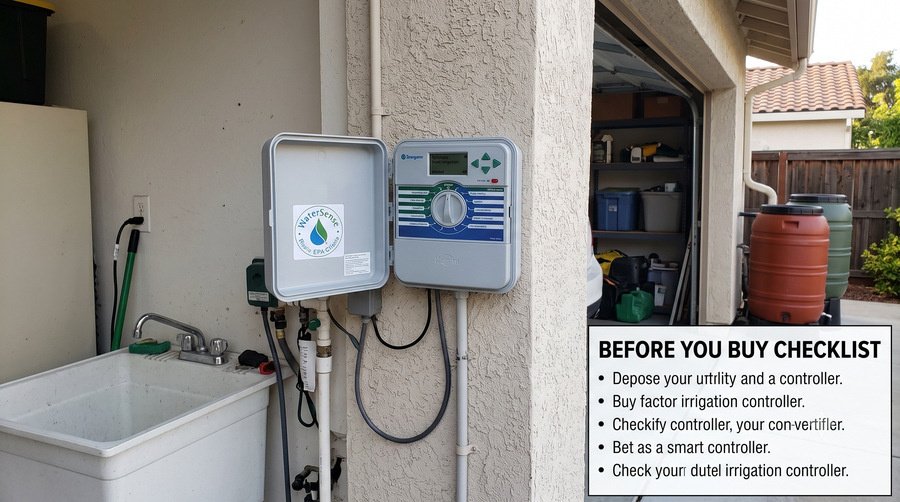
Before You Buy checklist
- ✓ Confirm your utility actually offers a rebate program
- ✓ Verify the specific controller model is WaterSense certified
- ✓ Read the full eligibility requirements, not just the headline rebate amount
- ✓ Save your original purchase receipt
- ✓ Take installation photos if your program requires them
- ✓ Submit your application before the stated deadline
What typically disqualifies an application
- The controller isn’t WaterSense-labeled (the single most common reason)
- The purchase happened before the utility’s program was active, or after its yearly funding ran out
- Missing the application window after purchase
- Applying for a rental property without landlord authorization, where required
- Commercial/HOA-managed properties applying under a residential-only program
Expert Tip
Call your utility’s customer service line directly if their website’s rebate page looks outdated or unclear — many smaller utilities don’t keep their rebate pages current, but the program itself is often still active. A five-minute phone call can confirm whether a rebate exists even when the webpage suggests otherwise.
Frequently asked questions
Is there a federal smart irrigation controller rebate? No — rebates are run at the utility level, not federally. The EPA’s role is limited to the WaterSense certification program itself and maintaining a directory of known utility incentive programs, not issuing rebates directly.
Do all smart controllers qualify for rebates? No — only WaterSense-labeled models qualify for the vast majority of programs. Check for the WaterSense label specifically before buying if a rebate is part of your decision, since an otherwise excellent controller without that certification will disqualify you from most programs regardless of its actual water-saving performance.
How much can I typically expect back? Most residential rebates run $50–$100 per controller, though this varies significantly by utility and sometimes by property size or zone count. Some utilities offer higher amounts for multi-zone commercial or HOA-managed properties under a separate program tier.
What if my utility doesn’t have a program? Check whether your state has a broader water-efficiency incentive program that isn’t utility-specific — these are less common than utility-run programs but do exist in some water-stressed states. If neither exists, the water savings from a smart controller still accrue over time even without an upfront rebate.
Can I combine a manufacturer discount with a utility rebate? Usually yes — manufacturer sales/discounts and utility rebates are typically independent of each other, since one comes from the retailer or brand and the other from your utility. Check your specific utility’s terms, but stacking the two is common and rarely prohibited.
Do rebates apply to DIY installation? In most cases yes — the majority of residential programs don’t require professional installation. A smaller number of utilities do require it, usually for larger or commercial-adjacent systems, so confirm this for your specific program before assuming either way.
Can renters qualify for a rebate? Sometimes, but often only with landlord authorization or if the rebate is tied to the water account holder rather than the property owner specifically. This varies enough by utility that it’s worth confirming directly rather than assuming you don’t qualify as a renter.
How long does it take to receive a rebate after applying? This varies significantly by utility — some process rebates within a few weeks, others take a full billing cycle or longer, especially during peak application periods in spring and summer. Ask your utility for their typical processing time when you apply.
Can I receive more than one rebate? Some utilities cap rebates to one per household or one per water account, particularly for higher-value multi-zone programs. If you’re upgrading multiple properties or zones, check whether your utility allows multiple claims before assuming you can apply more than once.
Are commercial properties eligible? Often yes, but usually under a separate program tier with different requirements and sometimes higher rebate amounts than the residential program. Commercial and HOA-managed properties applying under a residential-only program is one of the more common reasons for disqualification, so confirm which tier actually applies to your property type.
Further reading
- EPA WaterSense: Rebates and Incentive Programs — the closest thing to a centralized, currently-maintained directory
- EPA WaterSense: Product Search — confirm your specific controller model is currently WaterSense-labeled before applying
- EPA WaterSense: Statistics and Facts — source for the water-savings figures cited above
How we put this guide together
We reviewed EPA WaterSense guidance, publicly available utility rebate program requirements, and manufacturer eligibility information to build this guide. Because local rebate programs change frequently — funding resets, requirements shift, some programs pause entirely — we’ve deliberately focused on a repeatable process for finding your current, local incentive rather than publishing a state-by-state list that would be outdated within months of going live.
The bottom line
A smart irrigation controller rebate can meaningfully reduce the cost of upgrading your system, but only if you meet your specific utility’s requirements. Before purchasing, verify that your utility offers a program and that the controller you’re considering actually carries the EPA WaterSense label. Spending a few minutes confirming eligibility upfront can save you $50–$100 or more — while the water savings from the controller itself keep paying off long after the rebate check clears.
This piece is part of our smart irrigation series — see our Best Smart Irrigation Controllers roundup for model picks, and our “How Smart Irrigation Controllers Work” pillar for the technology behind WaterSense-certified scheduling.
The GoEfte editorial team researches and compares yard, garden, and water products, drawing on manufacturer specs, horticultural extension guidance, and verified owner reviews to help homeowners choose the right gear for their space and budget.