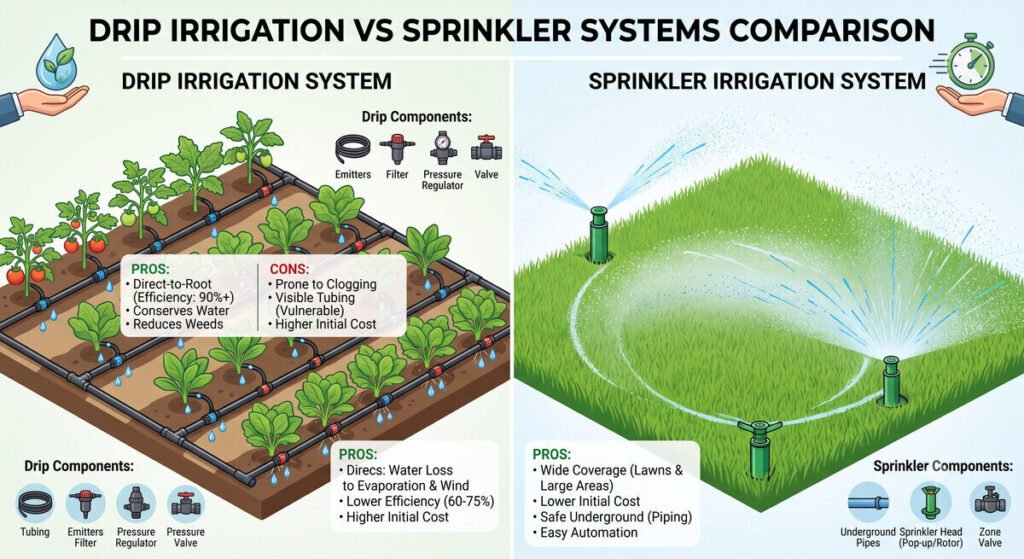
Choosing between drip irrigation vs. sprinkler systems mostly comes down to what you’re actually watering. Sprinklers are designed for large lawn areas, while drip irrigation delivers water directly to plant roots in garden beds, shrubs, and containers. Most homeowners get the best results by combining both systems under a single smart irrigation controller rather than picking one exclusively.
Quick Verdict
| If you have… | Choose… |
|---|---|
| Large lawn | Sprinklers |
| Vegetable garden | Drip irrigation |
| Flower beds | Drip irrigation |
| Mixed yard (lawn + beds) | Both, on separate zones |
| Containers | Drip irrigation |
| HOA-managed turf lawn | Sprinklers |
Key Takeaways
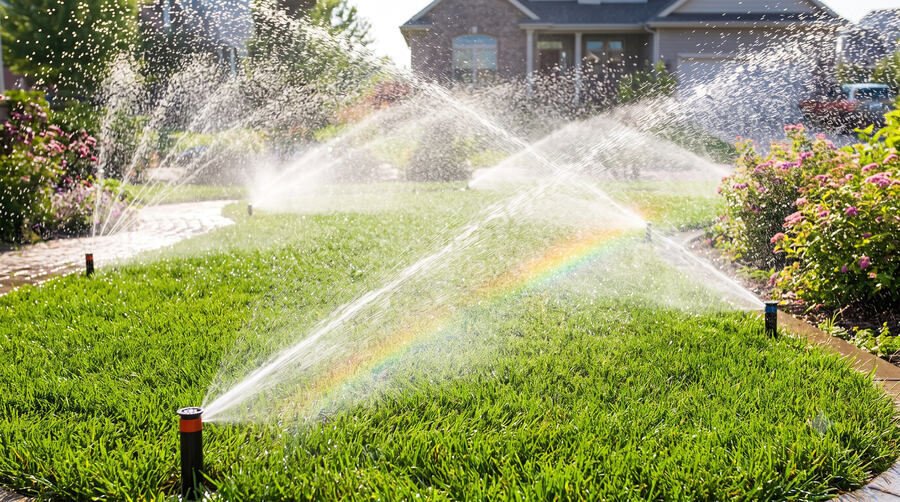
- Sprinklers are built for turf — broad, even coverage across open lawn areas where water needs to reach a large surface uniformly.
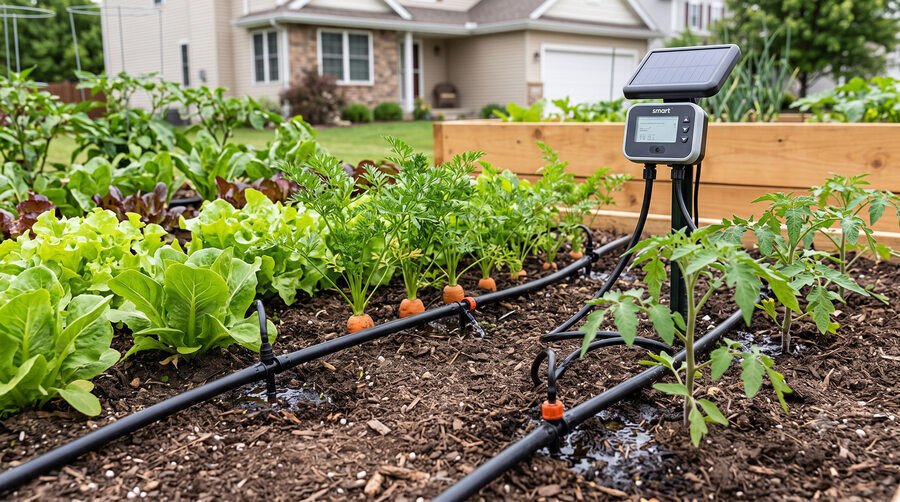
- Drip irrigation is built for plants — targeted, slow water delivery directly to root zones, ideal for garden beds, shrubs, and container plantings.
- Drip systems are meaningfully more water-efficient for non-lawn areas — less evaporation and runoff since water goes straight to the soil rather than through the air.
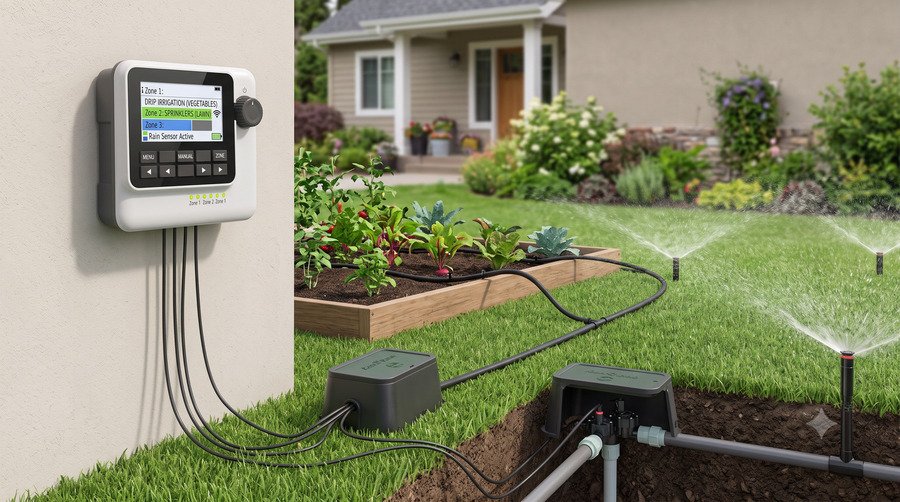
- Most efficient real-world yards run both systems on separate zones through the same smart controller — sprinklers for lawn, drip for beds — rather than choosing one for the entire property.
- Drip systems generally cost less to install for garden-bed-sized areas, while sprinklers are the more practical and often cheaper option for larger open turf areas.
The water savings, with real numbers
According to the EPA, converting to a water-efficient landscape — which includes matching irrigation type to what’s actually being watered, not just plant selection — can reduce outdoor water use by 20 to 50 percent, depending on climate, soil, and watering practices. Drip irrigation contributes to that range specifically by cutting the evaporation and wind-drift losses that overhead sprinkler spray is prone to, since water goes straight to the root zone rather than through open air first. (Source: EPA WaterSense)
Drip Irrigation vs. Sprinkler Systems: Side-by-Side Comparison
| Drip Irrigation | Sprinkler Systems | |
|---|---|---|
| Best for | Garden beds, shrubs, containers, rows | Open lawn, turf |
| Water efficiency | Higher — minimal evaporation/runoff | Lower — more exposed to wind and evaporation |
| Coverage pattern | Targeted, per-plant or per-row | Broad, even area coverage |
| Typical install cost (per zone) | Lower for small/medium bed areas | Lower for large open areas (fewer components per sq ft) |
| Maintenance | Emitters can clog, need periodic checks | Heads can break, get blocked by growth |
| Compatibility with smart controllers | Yes — same controllers, different zone type | Yes — standard zone type on nearly every controller |
Pros and cons at a glance
| Drip Irrigation | Sprinkler Systems |
|---|---|
| ✅ Uses less water overall | ✅ Best for large lawn areas |
| ✅ Reduces weed growth (less surface wetting) | ✅ Covers large areas quickly |
| ✅ Better for shrubs and root-sensitive plants | ✅ Easier to mow around, no tubing underfoot |
| ❌ Emitters can clog over time | ❌ More evaporation loss |
| ❌ Slower overall watering process | ❌ Wind drift reduces coverage accuracy |
Matching irrigation type to your soil
| Soil Type | Best Choice |
|---|---|
| Sandy | Drip — fast-draining soil benefits from slow, steady delivery |
| Loam | Either — this balanced soil type tolerates both well |
| Clay | Drip, with a slower flow rate — clay holds water longer and is prone to runoff/pooling if watered too fast |
Matching irrigation type to your climate
| Climate | Best System |
|---|---|
| Arid/desert | Mostly drip — evaporation loss from sprinklers is highest here |
| Humid Southeast | Combination — lawn needs differ sharply from bed needs in this climate |
| Temperate | Combination — most common real-world setup |
| Mediterranean (dry summer) | Drip preferred for the dry season specifically |
Treat this as directional guidance, not a rigid rule — your specific microclimate, sun exposure, and plant selection all matter more than climate zone alone.
Water pressure considerations
This is one of the most common DIY questions, and it’s worth getting right before you buy components:
- Drip irrigation typically runs at lower operating pressure and usually requires a pressure regulator, since most municipal water supply pressure is higher than drip emitters are rated for.
- Sprinkler systems generally need higher pressure to achieve even spray coverage and reach their full application radius.
- Smart controllers manage watering schedules, not water pressure — a controller won’t fix a pressure mismatch; that’s a plumbing-side component (regulator, pressure-reducing valve), not a scheduling one.
Cost breakdown
| Drip | Sprinkler | |
|---|---|---|
| DIY install | $ | $$ |
| Professional install | $$ | $$$ |
| Ongoing water bills | Lower | Higher |
| Maintenance | Low | Moderate |
Treat these as relative tiers, not fixed dollar amounts — actual cost depends heavily on zone count, area size, and your local labor rates.
How to actually decide for your yard
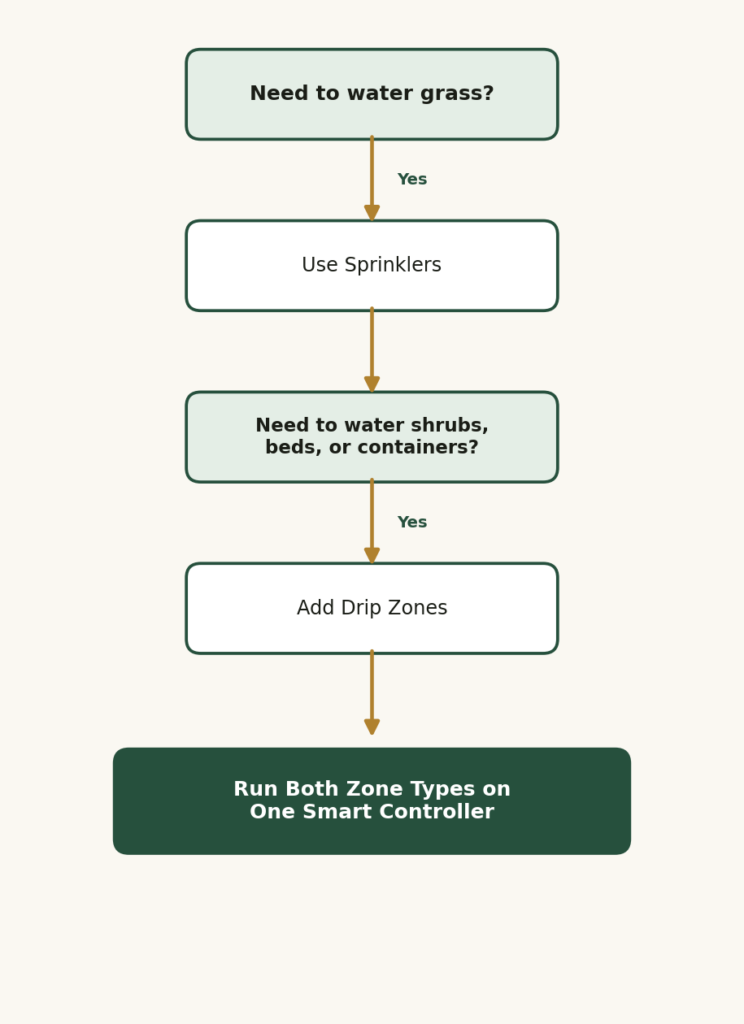
- Split your property by area type, not as one single decision. Most yards have both lawn and planted beds — treat these as separate zones with separate irrigation types rather than trying to find one system that does both well.
- Prioritize drip for anything that isn’t turf. Vegetable gardens, foundation shrubs, flower beds, and container plantings all respond better to targeted root-zone watering than to overhead spray, which also helps prevent certain foliar diseases that come from wetting leaves.
- Keep sprinklers for actual lawn areas. There’s no practical drip equivalent for turf — grass needs even surface coverage across a wide area, which is exactly what sprinkler heads are built for.
- Check zone compatibility with your controller before assuming you need two separate controllers. Nearly every modern smart irrigation controller (see our smart irrigation controller roundup) supports both drip and sprinkler zones on the same unit — you don’t need separate hardware for each irrigation type.
- Factor in your soil type and climate, using the tables above as a starting point rather than a final answer.
Common mistakes to avoid
- Using sprinklers in narrow flower beds, where most of the spray misses the actual planting area
- Installing drip emitters too far from the plant’s root zone, reducing their effectiveness
- Mixing lawn and drip zones on the same watering schedule — they have very different water needs and shouldn’t run on identical timing
- Ignoring seasonal watering adjustments — both systems need schedule changes across the growing season, not a “set once” schedule
- Forgetting to flush drip lines annually, which prevents mineral buildup and clogging in emitters
Should you water your grass or your beds first?
Expert Tip
If you’re retrofitting an existing all-sprinkler yard rather than starting from scratch, converting just the planted beds to drip — while leaving the lawn zones on sprinklers — is usually the highest-value, lowest-disruption upgrade. You don’t need to redo the whole system to get most of the water-efficiency benefit.
Can I run drip and sprinklers from the same irrigation controller? Yes — nearly all modern smart irrigation controllers support both zone types on the same unit, typically with different default watering schedules/durations preset for each. You don’t need two separate controllers.
Is drip irrigation actually worth the water savings for a small garden bed? Usually yes, especially in drier climates or during watering restrictions — the reduced evaporation and runoff mean less total water used to keep the same plants adequately hydrated, and many drip systems pay for themselves in water savings within a couple of seasons.
Do sprinklers waste more water than drip, or is that overstated? It’s a real difference, not overstated, but the size of the gap depends heavily on wind, heat, and how well-maintained the sprinkler heads are. A well-maintained, properly scheduled sprinkler system is far more efficient than a neglected one — but drip still generally outperforms even a well-run sprinkler system for non-turf areas specifically.
What’s the biggest maintenance difference between the two? Sprinkler heads can get knocked out of alignment, blocked by growing grass or mulch, or break outright — usually an obvious, visible problem. Drip emitters can clog silently (mineral buildup, debris) without an obvious visual sign, so periodic manual checks of your drip zones matter more than most people expect.
Can I convert an existing sprinkler system to drip irrigation? Yes — conversion kits exist specifically for this, typically replacing sprinkler heads with drip line or emitters on the same existing valve/zone. It’s a common retrofit, particularly for converting one or two bed zones without redoing the whole system.
Does choosing drip over sprinklers increase home value? There’s no reliable, well-established data specifically separating the two by resale value — a well-maintained irrigation system of either type supports curb appeal and reduces buyer concerns about landscape upkeep, but we’re not aware of solid evidence that irrigation type specifically is a measurable value driver on its own.
Does drip irrigation work with rain barrels? Yes — low-pressure drip systems generally pair well with gravity-fed rain barrel setups, since drip emitters need less pressure than sprinkler heads to function properly. If you’re using or considering harvested rainwater, see our rainwater harvesting legality guide for state-by-state rules before setting this up.
Which system is easier for DIY installation? Drip irrigation kits are generally more modular and beginner-friendly — most connect to an existing spigot or valve without trenching. Sprinkler systems typically involve more plumbing and often trenching for buried lines, making them a bigger DIY undertaking.
How long do drip irrigation systems last? Tubing and emitters typically last 7–15 years with basic annual maintenance (flushing lines, replacing clogged emitters); UV-resistant tubing tends toward the longer end of that range. Actual lifespan varies with climate exposure and water quality.
Is one system better during drought restrictions? Drip irrigation is often treated more favorably under local drought restrictions since it’s inherently more water-efficient, but exact rules vary significantly by municipality — some water authorities exempt drip systems from certain watering-day restrictions entirely, others don’t. Check your specific local ordinance rather than assuming either way.
Further reading
- EPA WaterSense: Outdoor Water Use — general water-efficiency guidance covering both irrigation types
How we put this comparison together
This comparison is built from published horticultural extension guidance, EPA WaterSense data, and manufacturer specifications for both irrigation types, not from side-by-side in-house installation testing at this time. Soil type, climate, and plant selection all affect real-world results more than any single spec sheet can capture — treat this as a decision framework to apply to your specific yard, not a universal ranking of one system over the other.
This piece is part of our water systems series — see our Best Smart Irrigation Controllers roundup for controller picks that support both zone types, our Smart Irrigation Controller Rebates guide if you’re upgrading your controller alongside your irrigation type, and our “How Smart Irrigation Controllers Work” pillar for how scheduling actually works across zones.
The GoEfte editorial team researches and compares yard, garden, and water products, drawing on manufacturer specs, horticultural extension guidance, and verified owner reviews to help homeowners choose the right gear for their space and budget.