Quick answer
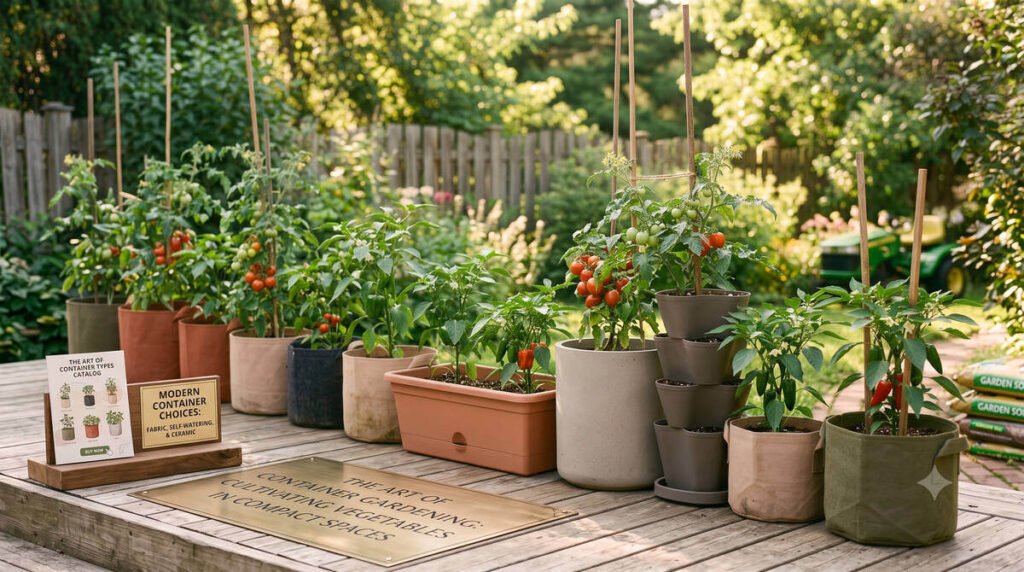
For most vegetable gardeners without in-ground space, fabric grow bags are the best containers for vegetable gardening to start with — they cost less than raised beds, improve root health through air pruning, and fold flat for off-season storage. VIVOSUN’s 5-gallon fabric grow bags are the strongest all-around pick for tomatoes, peppers, and most vegetables. If you travel often or live in a hot climate, a self-watering container like City Pickers or EarthBox reduces the risk of losing plants to a missed watering day. Size is the detail beginners get wrong most often: a 5-gallon bag is the minimum for a single tomato plant, with 10-gallon+ recommended for indeterminate varieties that grow all season.
Table of contents
- Why containers instead of raised beds or ground planting
- Top picks at a glance
- The picks, one by one
- Sizing containers to your vegetables
- Fabric grow bags vs. plastic pots vs. self-watering containers
- How to actually choose
- Frequently asked questions
- How we put this comparison together
Why containers instead of raised beds or ground planting
Once you’ve decided containers make more sense than a raised bed — covered in our raised bed vs. container gardening guide — the next question in choosing the best containers for vegetable gardening is which type actually fits what you’re growing. “Container gardening” now spans everything from a $12 fabric bag to a $150 self-watering system on wheels, and the right pick depends less on price and more on your climate, how often you’re around to water, and what you’re actually growing.
We compared current specifications, retailer listings, and available third-party feedback for models from VIVOSUN, AC Infinity, 247Garden, City Pickers, and EarthBox against the criteria that matter most for vegetables specifically: root health, watering consistency, durability across seasons, and total cost including any accessories you’d realistically need.
Top picks at a glance
| Category | Model | Best for |
|---|---|---|
| Best overall | VIVOSUN 5-Gallon Fabric Grow Bags (5-pack) | Most vegetables, balance of price and durability |
| Best for serious growers | AC Infinity Heavy Duty Fabric Pots (5-pack) | Multi-season use, tomatoes/peppers needing support |
| Best budget | 247Garden Fabric Pots | Lowest cost per bag, wide size range |
| Best self-watering (budget) | City Pickers Raised Bed Grow Box | Travelers, hot climates, lower upfront cost |
| Best self-watering (premium) | EarthBox | Deeper root zone, sturdiest long-term build |
The picks, one by one
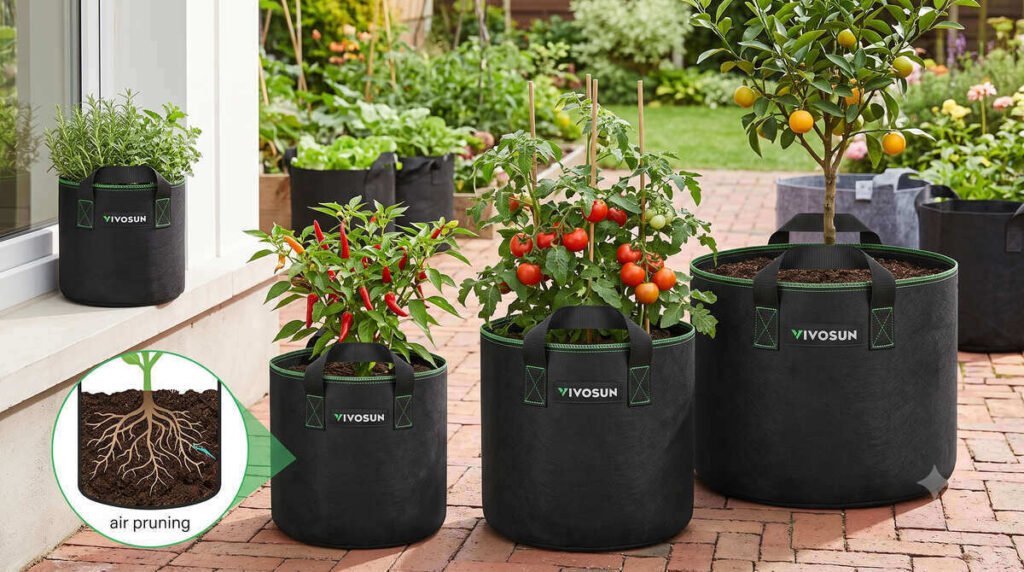
Best overall: VIVOSUN 5-Gallon Fabric Grow Bags (5-Pack)
VIVOSUN’s fabric grow bags are our best overall pick: 300g non-woven fabric that’s thick enough to last multiple seasons, reinforced handles rated to hold up under a full load of wet soil, and a price per bag that undercuts most name-brand competitors even at a 5-pack. Like other fabric grow bags, the breathable material is designed to trigger air pruning — roots stop circling and branch out instead, which is generally associated with a healthier root system than a solid-sided plastic pot.
Available across a wide size range (1 to 30 gallons), so the same brand covers everything from a windowsill herb bag to a full tomato plant.
Good for: most vegetable gardeners who want one reliable brand across multiple plant types and sizes. Skip if: you’re doing heavy multi-season commercial-scale growing — step up to AC Infinity’s heavier fabric for that use case.
Best for serious growers: AC Infinity Heavy Duty Fabric Pots (5-Pack)
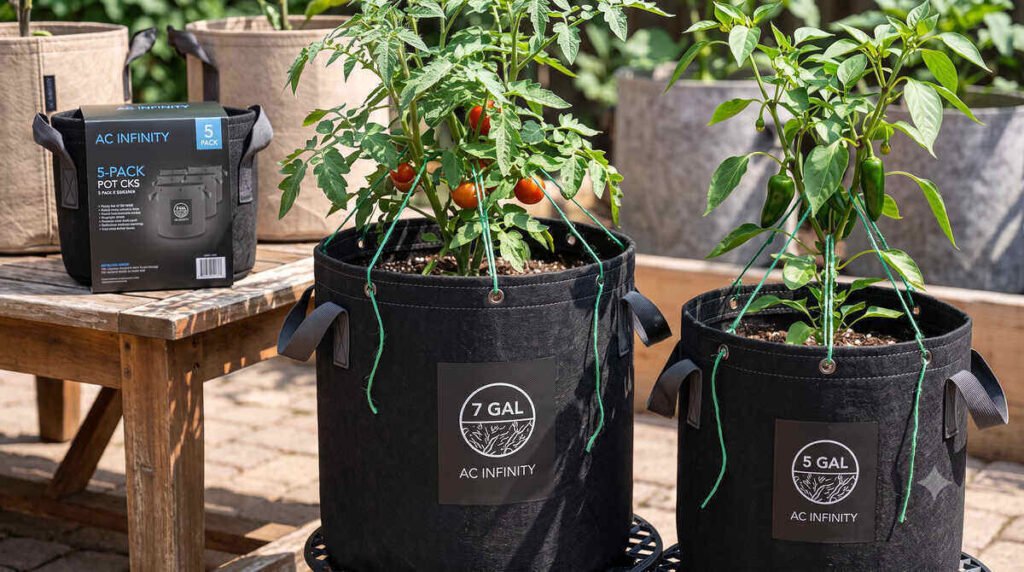
AC Infinity’s fabric pots use a noticeably thicker 500G fabric than most competitors, built for growers who want their containers to outlast several seasons rather than needing seasonal replacement. Each bag includes integrated multi-purpose rings around the rim, which let you do low-stress training on tomatoes and peppers — gently bending branches outward to improve light exposure and yield, a technique more common in dedicated growing setups than casual container gardening.
The tradeoff is price: these cost more per bag than VIVOSUN or budget alternatives, and that extra durability is genuinely overkill for lettuce, herbs, or a single-season planting.
Good for: gardeners who want their grow bags to last multiple years, or anyone training tomatoes/peppers for better light exposure. Skip if: you’re growing shallow-rooted crops or only need bags for one season — the extra cost isn’t justified.
Best budget: 247Garden Fabric Pots
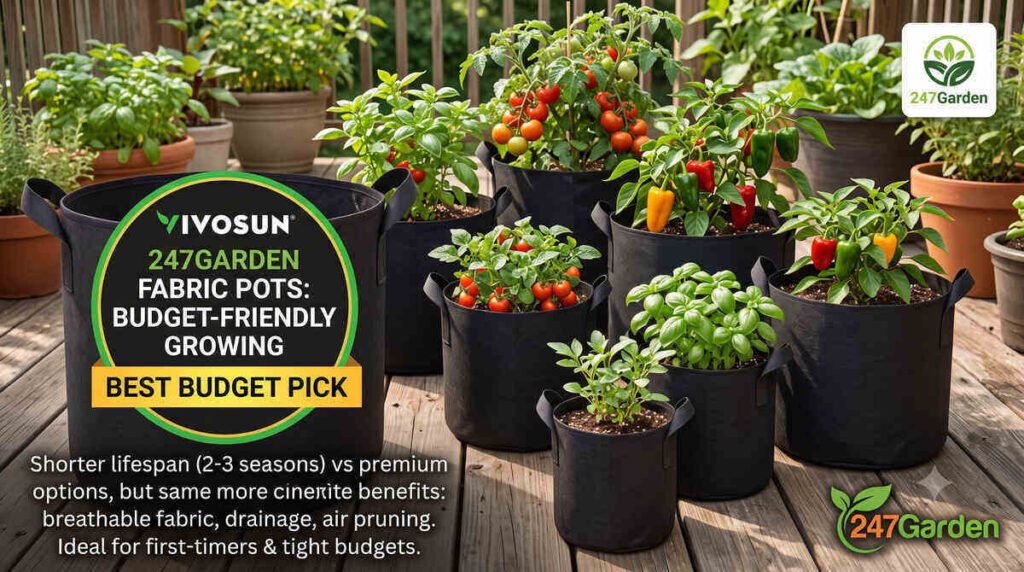
247Garden’s fabric pots deliver the same core benefits as premium brands — breathable fabric, drainage, air pruning — at the lowest per-bag cost in this roundup, with a wide range of sizes available. The fabric is thinner than AC Infinity’s, so expect a shorter realistic lifespan (closer to 2-3 seasons with regular use versus 4+ for heavy-duty options), but for gardeners testing container growing for the first time or working with a tight budget, that tradeoff is reasonable.
Good for: first-time container gardeners, tight budgets, or anyone testing the category before committing to premium bags. Skip if: you want bags that last as long as possible without replacement — spend more upfront on AC Infinity instead.
Best self-watering (budget): City Pickers Raised Bed Grow Box
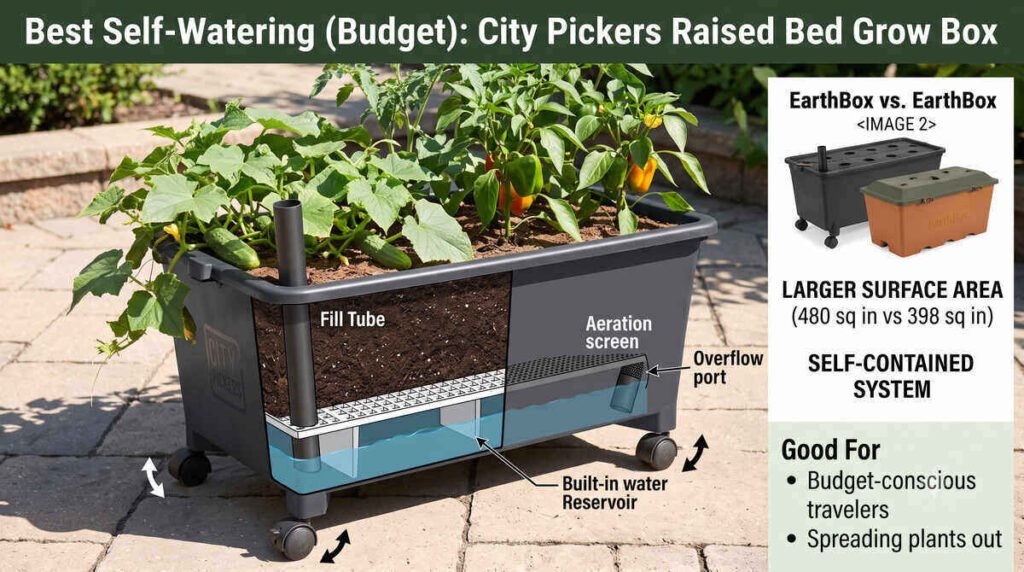
City Pickers takes a different approach than a simple grow bag: a self-contained plastic raised bed with a built-in water reservoir, a plastic grid separating potting mix from water below, and a fill tube for easy top-ups. A mulch cover and aeration screen are included, which helps with weed suppression and root airflow. Wheeled casters make it easy to reposition for sun.
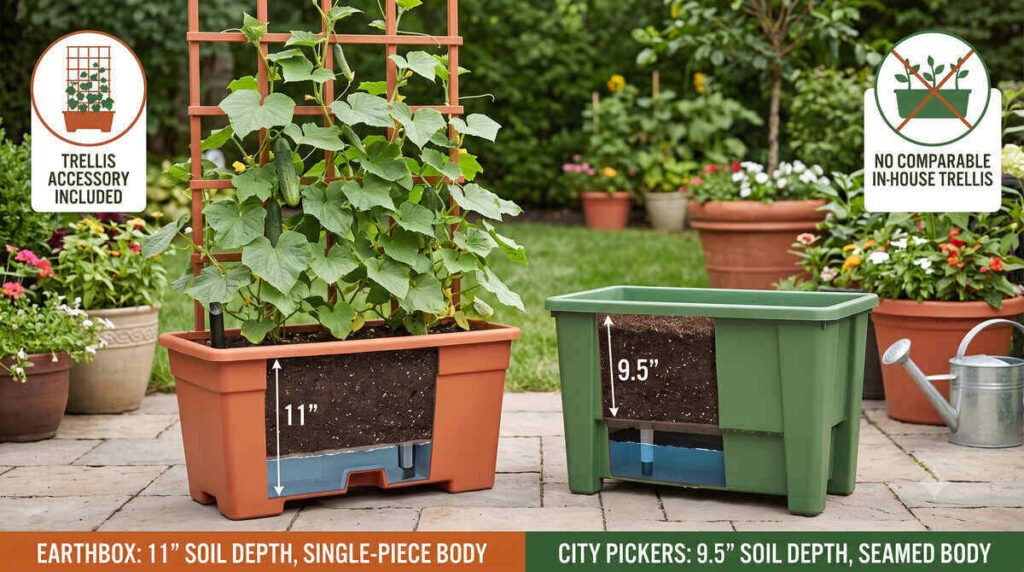
Compared to EarthBox, City Pickers is meaningfully cheaper and has a larger surface area (480 square inches vs. EarthBox’s 398), making it a reasonable pick for gardeners who want to spread plants out rather than grow them deep. The tradeoff is longevity — some owner reviews describe the plastic becoming brittle after a few seasons of sun exposure, and the two-piece snap-together design is reported as a source of leaks more often than EarthBox’s single-piece build.
Good for: budget-conscious gardeners who travel or can’t water daily, and anyone who wants more surface area for spreading plants out. Skip if: you want the longest possible lifespan from a self-watering system — EarthBox’s single-piece construction holds up better over years of use.
Best self-watering (premium): EarthBox
EarthBox is the more durable of the two major self-watering systems compared here, with a deeper growing area (11 inches vs. City Pickers’ 9.5 inches) that suits deeper-rooted vegetables better, and a single-piece plastic construction that avoids the seam-leak issue some City Pickers owners report after a few seasons. The larger water reservoir also means longer stretches between refills, which matters if you’re regularly away for a week or more.
EarthBox also offers trellis and vertical-growing accessories directly, useful for vining vegetables like cucumbers or pole beans, which City Pickers doesn’t offer as a comparable in-house option.
Good for: gardeners who want the most durable long-term self-watering system, or anyone growing deeper-rooted or vining vegetables. Skip if: budget is the main constraint — City Pickers delivers most of the same core benefit for less upfront cost.
Sizing containers to your vegetables
Undersizing is the most common mistake in container vegetable gardening — a plant that’s too cramped shows it every day through stunted growth and lower yield.
| Vegetable type | Minimum container size |
|---|---|
| Herbs, lettuce, greens | 1-3 gallons |
| Peppers, bush beans | 3-5 gallons |
| Tomatoes (determinate) | 5-7 gallons |
| Tomatoes (indeterminate, all-season) | 10+ gallons |
| Potatoes, squash | 10-15 gallons |
When in doubt, size up rather than down — a slightly oversized container costs a little more in soil but rarely hurts the plant, while an undersized one reliably limits yield.
Fabric grow bags vs. plastic pots vs. self-watering containers
Fabric grow bags offer the best root health of the three, thanks to air pruning, and the easiest off-season storage since they fold flat. The tradeoff is that breathable fabric also means faster drying — expect to water more frequently than a sealed plastic pot, especially in hot weather.
Plastic pots are the cheapest and most widely available option, but offer no air pruning benefit and can trap heat in dark-colored pots during peak summer sun, stressing roots. They’re a reasonable choice for shaded patios or mild climates where heat buildup isn’t a major concern.
Self-watering containers solve the watering-frequency problem directly with a built-in reservoir, at the cost of a smaller usable soil-to-reservoir ratio and a higher upfront price than a basic grow bag or pot. They’re the strongest pick specifically for hot climates or gardeners who can’t water daily.
How to actually choose
How often can you realistically water? If you’re home daily and don’t mind the routine, fabric grow bags are the simplest and cheapest path. If you travel, work long hours, or live somewhere hot and dry, a self-watering container meaningfully reduces the risk of losing a plant to one missed day.
What are you growing? Shallow-rooted herbs and greens do fine in small fabric bags or plastic pots. Deep-rooted or vining vegetables (tomatoes, cucumbers, squash) benefit from either a large fabric bag (10+ gallons) or a deeper self-watering system like EarthBox.
How much are you willing to spend upfront vs. per season? Fabric grow bags are cheapest to start but may need replacing every 2-4 seasons depending on quality. Self-watering systems cost more upfront but are typically a multi-year purchase, similar to the raised-bed cost-per-year logic we cover in our raised garden beds comparison.
How much space do you have? A balcony or small patio favors fabric bags you can cluster tightly or a compact self-watering unit. A larger patio or side yard has room for EarthBox’s bigger footprint or a City Pickers unit with its wider surface area.
Frequently asked questions
Do fabric grow bags really work better than plastic pots? For root health specifically, yes — the breathable fabric triggers air pruning, which stops roots from circling the container wall the way they do in solid plastic. This generally produces a more developed root system and can improve yield, though it also means fabric bags dry out faster and need more frequent watering than a sealed plastic pot.
How many seasons do fabric grow bags actually last? It depends on fabric thickness (measured in GSM). Budget bags in the 150-250 GSM range typically last 2-3 seasons with regular use. Heavier-duty bags at 500 GSM, like AC Infinity’s, are built to last 4 or more seasons with proper off-season storage.
Is a self-watering container worth the extra cost for vegetables specifically? It depends on your climate and schedule. In hot, dry climates or for anyone who travels frequently, a self-watering reservoir can meaningfully reduce plant stress from missed waterings. For gardeners in milder climates who are home daily, the added cost may not be necessary.
Can I reuse fabric grow bags year after year? Yes, with proper care — rinse out old soil at the end of the season, let the bag fully dry, and store it flat indoors over winter. UV exposure and freeze-thaw cycling left outdoors are what shorten a fabric bag’s lifespan fastest.
What size grow bag do I need for a single tomato plant? At minimum, 5 gallons for a determinate (bush) variety. Indeterminate tomatoes, which keep growing and producing all season, do better with 10 gallons or more — undersizing is the most common reason container-grown tomatoes underperform compared to the same variety in the ground.
How we put this comparison together
This roundup is built from published manufacturer specifications, verified retailer listings, and aggregated third-party test data and owner feedback for each product — not from in-house hands-on testing at this time. Where a claim comes from a manufacturer spec sheet rather than independent verification, we’ve noted it as such. As we complete hands-on testing on individual containers, we’ll update this post and link out to full individual reviews with our own first-hand notes.
Further reading
- University of Maryland Extension: Container Vegetable Gardening — sizing and soil-mix guidance for container-grown vegetables.
- USDA Plant Hardiness Zone Map — useful for timing plantings based on your zone, relevant to both containers and raised beds.
Sources referenced
- https://www.amazon.com/VIVOSUN-5-Pack-Thickened-Nonwoven-Handles/dp/B00TF9E6XE
- https://acinfinity.com/grow-accessories/heavy-duty-reusable-fabric-pots-5-gallon-5-pack/
- https://www.amazon.com/AC-Infinity-Aeration-Multi-Purpose-Vegetables/dp/B092LGVVV6
- https://www.amazon.com/247Garden-5-Gallon-Aeration-Planting-Vegetables/dp/B01KKW8T9G
- https://www.amazon.com/Emsco-Group-Pickers-Watering-Charcoal/dp/B0798W7X4Y
- https://www.amazon.com/EarthBox-Container-Gardening-System-Gray/dp/B0CMY3CNM4
Note: prices, current stock, and exact pack contents change frequently on Amazon — verify each listing against the live page immediately before publishing, consistent with your standing ASIN-verification practice. ASINs above were confirmed live at time of writing but should be re-checked, since Amazon listings can be delisted or swapped without notice.
Next in this series: Best Vertical Garden & Trellis Systems, and a container gardening watering schedule guide by climate zone.
The GoEfte editorial team researches and compares yard, garden, and water products, drawing on manufacturer specs, horticultural extension guidance, and verified owner reviews to help homeowners choose the right gear for their space and budget.