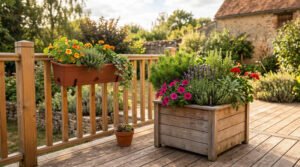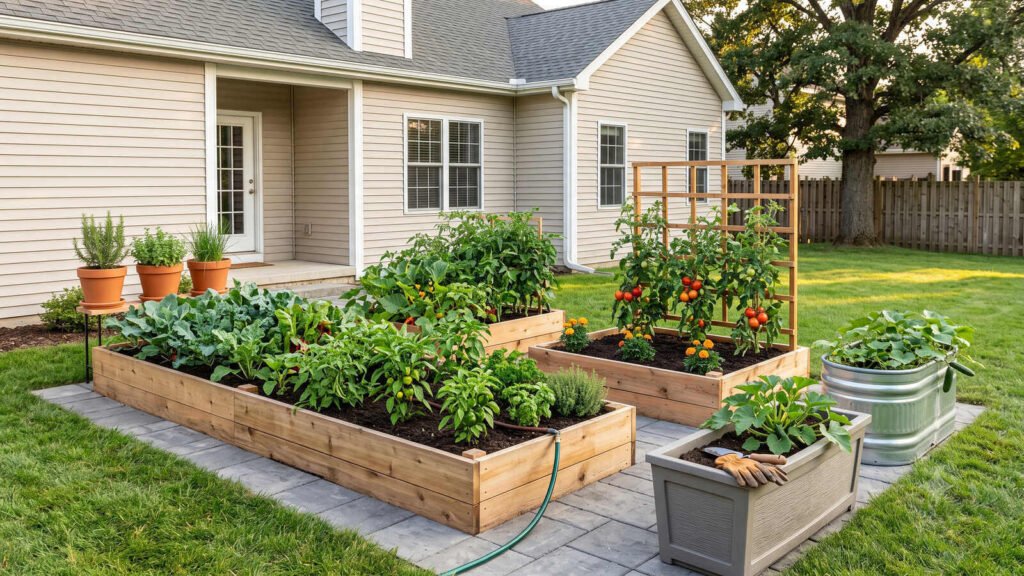
Finding the best raised garden beds for your yard starts with material, depth, and size — not just price. If you’ve decided a raised bed is a better fit than containers, the next question is which one actually suits your space. Depth alone changes what you can grow — a 12-inch bed handles lettuce and herbs fine, but tomatoes and root vegetables want closer to 18-24 inches. Material changes how long a bed lasts and how it handles your climate. Price ranges from under $50 for a basic galvanized kit to $300+ for a modular aluzinc system sized to your exact yard.
Updated: July 2026. Specifications verified from manufacturer and retailer listings. Pricing reflects current published retailer data — always confirm against the live listing before buying, since promotions on these shift often. Researched and reviewed by the GoEfte editorial team using manufacturer specifications, retailer listings, and independent sources.
Quick take
- Best overall / modular: Vego Garden 17″ Tall 10-in-1 Jumbo Modular
- Best value: Annoell Galvanized Raised Bed (6x2x1.5ft)
- Best self-watering: Quictent Galvanized Bed with Self-Watering System
- Best for patios/decks: LEETOLLA Elevate 32″ with Wheels
- Best natural wood: Infinite Cedar Deep Root Kit
At a glance
| Model | Material | Depth | Assembly | Est. lifespan | Warranty | Self-watering | Price tier |
|---|---|---|---|---|---|---|---|
| Vego Garden 10-in-1 Jumbo | Aluzinc (VZ 2.0) | 17″ | Moderate | 20+ years | 2-year limited | No | Premium ($200–400+) |
| Annoell Galvanized (6x2x1.5ft) | Galvanized steel (Zn-Al-Mg coated) | 17-18″ | Easy | Brand claims 20+ years; not independently verified | Not clearly quantified in listing — check manufacturer page | No | Mid-range ($50–150) |
| Quictent Self-Watering | Galvanized steel | 12″ | Moderate | Not independently verified; check listing | Not clearly published — check listing | Yes (misting system) | Mid-range ($50–150) |
| LEETOLLA Elevate 32″ | Powder-coated steel | Elevated box, ~12″ soil depth | Easy-Moderate | Not independently verified beyond lifetime rust warranty | Lifetime anti-rust warranty | No (drainage holes; saucer recommended) | Budget-to-mid ($55–90) |
| Infinite Cedar Deep Root | Western red cedar | 16.5″ | Easy–Moderate | 7–10 years | 5-year | No | Mid-range ($50–150) |
Editor’s Choice: If you’re unsure which raised bed to buy, choose the Vego Garden 10-in-1 Jumbo Modular. It offers the best balance of durability, flexibility, and long-term value for most home gardeners. If budget is the deciding factor instead, the Annoell Galvanized is the strongest step-down option.
What the price tiers actually mean
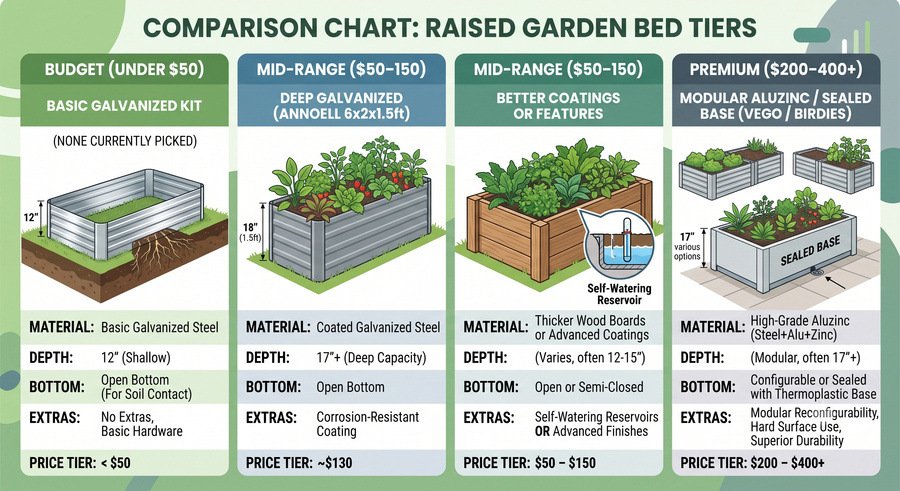
- Budget (under $50): basic galvanized kits, typically 12″ deep, open-bottom, no extras — the entry point for the category, though none of our current picks sit in this tier after our latest revision.
- Mid-range ($50–150): larger-capacity galvanized beds with real depth (17″+), better coatings, or self-watering features. Annoell’s 6x2x1.5ft bed lands here at roughly $130, with a smaller 12″-tall version available closer to $100.
- Premium ($200–400+): modular aluzinc systems (Vego Garden) — you’re paying for reconfigurability, not just a bigger box.
We compared current models from Vego Garden, Annoell, Quictent, LEETOLLA, and Infinite Cedar against the criteria that matter most: material durability, depth for root growth, modularity/customization, and total cost including any needed extras like a liner or self-watering reservoir.
The picks, one by one
Best overall / modular: Vego Garden 17″ Tall 10-in-1 Jumbo Modular Raised Bed
Vego Garden’s beds are built from what the company calls VZ 2.0 — a zinc, magnesium, and aluminum-coated steel developed with AkzoNobel paint and verified at the Texas A&M National Corrosion & Materials Reliability Lab. The “10-in-1″ modular system means the same panel kit can be configured into ten different bed shapes and sizes, so one purchase covers far more layout options than a fixed-size bed. At 17 inches tall, it comfortably handles most vegetables; gardeners who want extra depth for larger root crops can step up to Vego’s 26″ or 32” Extra Tall lines directly from the manufacturer.
Aluzinc steel like this is rated as meaningfully more corrosion-resistant than standard galvanized steel. Its reflective coated surface can help reduce heat absorption compared with darker materials, which is why it’s often preferred in hot-summer climates (roughly USDA zones 7–11). In colder zones, freeze-thaw cycling is more of an annual maintenance item than a metal-specific weakness — re-tightening fasteners each spring and avoiding salt-based de-icers near the bed keeps the coating intact regardless of climate.
Pros
- Ten configurations from one panel kit
- Texas A&M-verified corrosion resistance
- Strong performance in hot, high-UV climates
Cons
- Highest price tier of the picks here
- Assembly takes longer than a fixed-size kit
- Deeper 26″/32″ versions require a separate purchase
Good for: gardeners who want one system that can be reconfigured as their space or plans change, and anyone prioritizing long-term durability over upfront price. Skip if: you have a fixed small footprint and don’t need the modularity — a simpler fixed-size bed costs less for the same basic function.
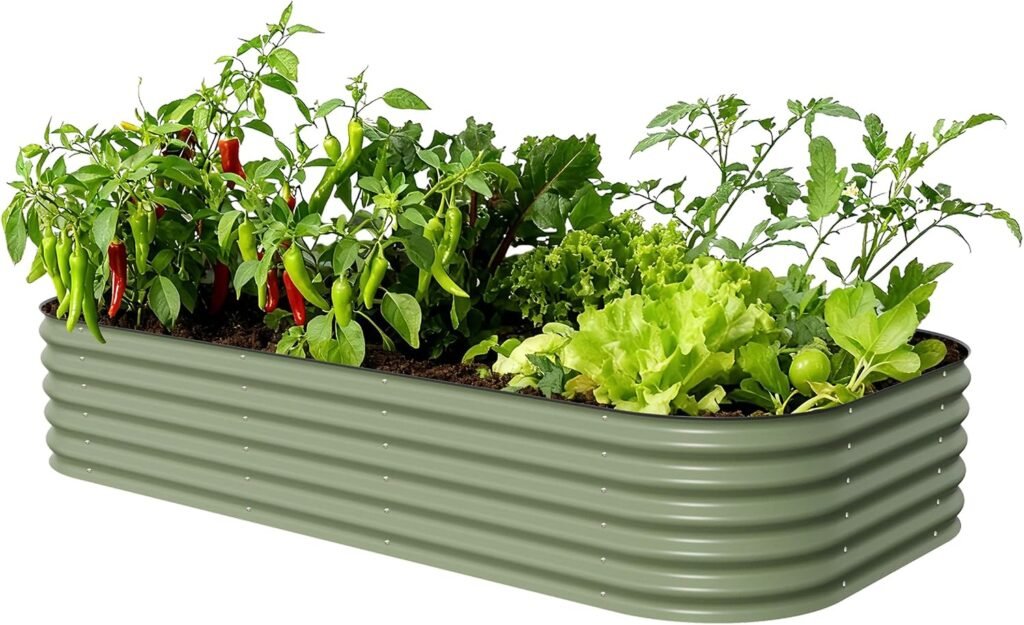
Best value pick: Annoell Galvanized Raised Garden Bed (6x2x1.5ft)
Annoell’s mid-size galvanized bed uses 0.85mm heavy-gauge steel with a Zn-Al-Mg alloy coating the brand describes as “self-healing” against surface scratches, and the panels are food-safe certified (RoHS compliant, Prop 65 compliant) with rounded, crimped edges that skip the rubber safety strips many competitors need. At 6x2x1.5ft, it holds roughly 16.7 cubic feet (about 125 gallons) of growing space — over twice the capacity of a basic entry-level bed — and at 17-18 inches tall, it’s deep enough for tomatoes and other moderately deep-rooted crops, not just herbs and lettuce. Assembly is bolt-together with no plastic film to peel off, and owner reviews consistently describe it as straightforward for one person to put together in under an hour.
This isn’t the cheapest way into raised-bed gardening — expect to pay roughly $100-170 depending on size and current promotions — but for that price you’re getting real depth and capacity rather than a bare-minimum starter kit.
Pros
- Real 17-18″ depth handles a wider range of crops than shallow budget beds
- No plastic film or rubber edge strips to install
- Food-safe certified coating (RoHS, Prop 65 compliant)
Cons
- Not the cheapest entry point in the category
- Warranty terms aren’t clearly quantified in the listing — check the manufacturer page directly
- Open base only, not deck/patio safe
Good for: gardeners who want meaningfully more depth and capacity than a basic starter bed without stepping all the way up to Vego’s modular pricing. Skip if: you want the absolute lowest entry cost — a smaller, shallower galvanized bed will cost less if budget is the only priority.
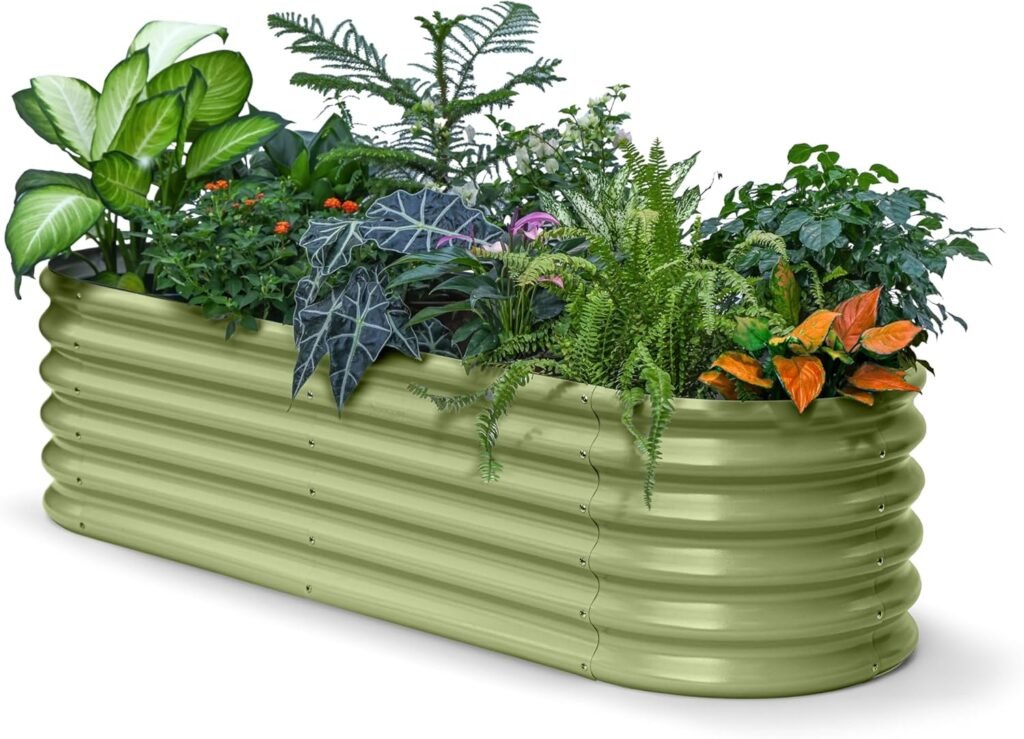
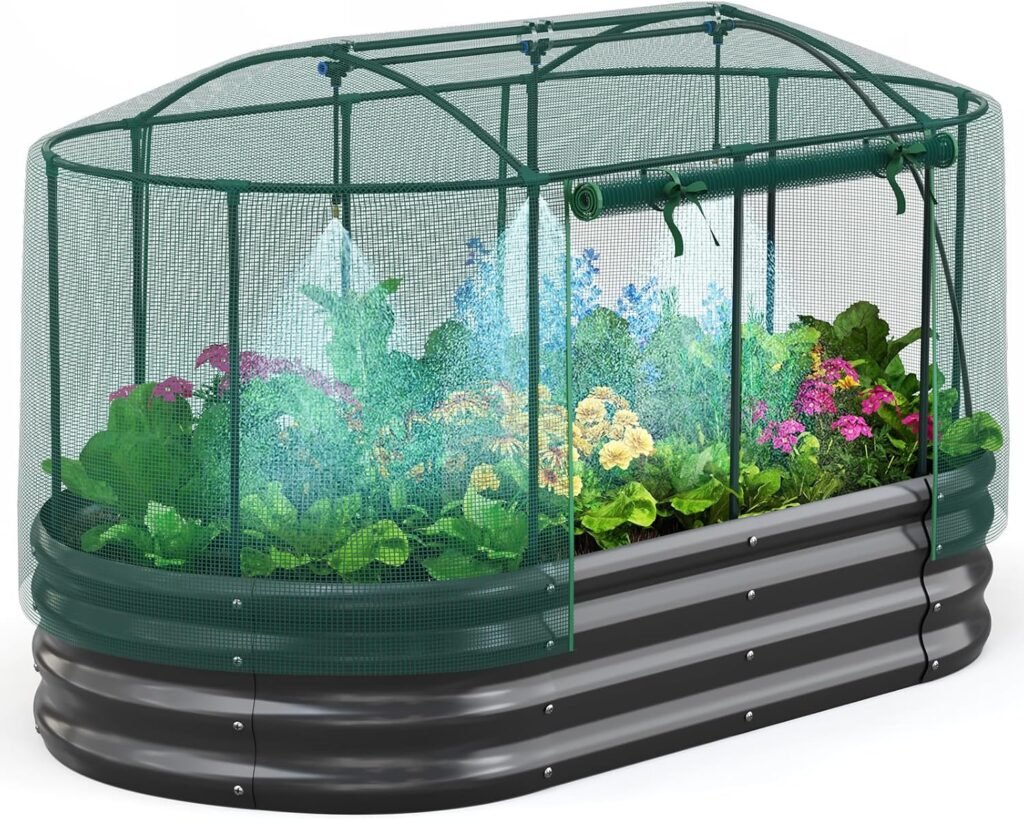
Best raised bed with built-in irrigation: Quictent Galvanized Raised Bed (6x3x1ft)
Quictent’s version takes a different approach to self-watering than a bottom-fed reservoir: it’s a misting-based irrigation kit built into an oval galvanized bed, designed to cover a larger area than spot-watering and increase humidity around the plants for more uniform moisture distribution. The kit ships with a mesh cover included, which adds bird and pest protection most other picks in this roundup don’t include out of the box.
At 6x3x1ft (12″ deep), it holds a generous footprint for the price, with the same no-sharp-corners oval safety design common across this category.
Pros
- Misting system covers a wider area than a single fill-tube reservoir
- Mesh cover included for bird/pest protection — not standard on most competitors
- Large 6x3ft footprint for the price
Cons
- 12″ depth is shallower than a dedicated deep-root bed — fine for herbs and most vegetables, tighter for deep-rooted crops
- Misting systems generally need more attention to water pressure/timing than a passive reservoir
- Some retailers show this model going in and out of stock
Good for: anyone who wants built-in irrigation plus pest protection in one kit, without hand-watering daily. Skip if: you specifically want a passive, no-maintenance reservoir system, or you’re growing something that needs more than 12″ of depth.
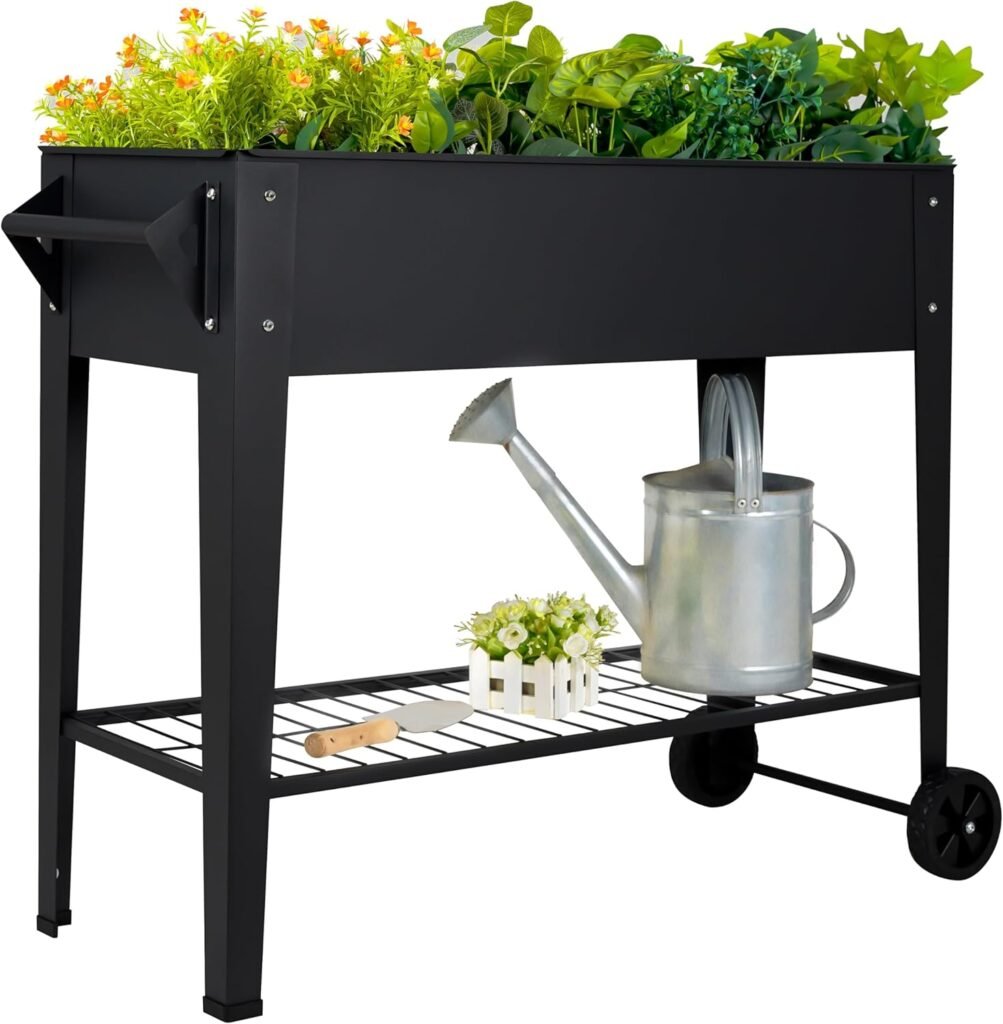
Best for patio or deck: LEETOLLA Elevate 32″ Raised Garden Bed with Wheels & Shelf
Rather than a sealed-base ground bed, LEETOLLA takes an elevated approach: a powder-coated steel planter box on legs, standing 32 inches tall with two all-terrain wheels and a lower storage shelf. Because the growing box sits raised above the surface rather than resting directly on it, it works on a deck, balcony, or patio without soil contact — though the listing specifically recommends placing a waterproof saucer underneath on decks, since the bottom still has drainage holes designed to prevent overwatering and root rot rather than a fully sealed tray.
Rated for 400 lbs of load capacity with anti-rust powder coating and a lifetime anti-rust warranty from the manufacturer, it’s built to handle both the soil weight and the wheeled mobility long-term. The 32″ standing height also means no bending or kneeling to tend it — a genuine bonus for anyone with mobility concerns, on top of the patio-safe use case.
Pros
- Elevated design keeps soil off the surface below — no in-ground placement required
- Wheels make it easy to reposition for sun exposure
- Lifetime anti-rust warranty from the manufacturer
- Standing height means no bending or kneeling
Cons
- Not a fully sealed base — a waterproof saucer is recommended (not included) for use on decks
- Smaller growing footprint than a full-size ground bed
- Wheeled/legged construction means less overall stability than a ground-set bed in high wind
Good for: apartment, balcony, or townhouse gardeners without yard access, or anyone who wants to reposition their bed for changing sun exposure through the season. Skip if: you have in-ground yard space, or you want maximum growing volume for the footprint — a full-size ground bed holds more soil per dollar.
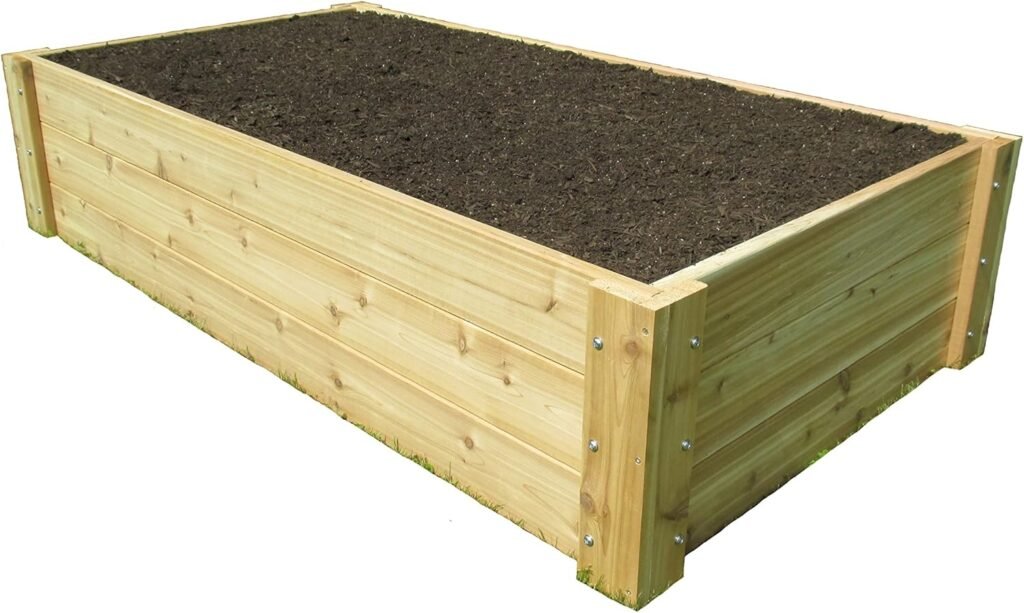
Best natural wood option: Infinite Cedar Deep Root Raised Bed Kit
For gardeners who want a classic wood look rather than a metal or plastic finish, Infinite Cedar’s kits are made in the USA from 100% natural Western Red Cedar — a wood naturally resistant to rot and insects without chemical treatment, so it can be left unfinished to age naturally or stained to match a deck or fence. The boards run a full 1 inch thick, thicker than many budget wood competitors, with reinforced corners built to avoid the pull-apart failure common with basic dovetail joints on cheaper kits.
Wood beds generally have a shorter realistic lifespan than metal — expect roughly 7-10 years for a well-built cedar bed versus 20+ years commonly claimed for aluzinc or galvanized steel — but for gardeners who specifically want the traditional look, cedar remains the standard choice.
Pros
- Natural rot and insect resistance without chemical treatment
- Thicker boards (1″) than most budget wood competitors
- Classic look that suits traditional garden aesthetics
Cons
- Shorter realistic lifespan (7-10 years) than metal options
- Needs occasional staining/sealing to maximize lifespan
- Heavier to move once assembled and filled
Good for: gardeners who want a natural wood aesthetic, or who plan to stain/paint the bed to match existing outdoor furniture. Skip if: you want the longest possible lifespan with zero maintenance — metal options here will outlast any wood bed.
Best by use case
- Best for tomatoes and peppers: Vego Garden (17″) or Annoell (17-18″) — both have real depth for deep root systems; step up to Vego’s 26″ line for the deepest option.
- Best for carrots and other root vegetables: Vego Garden’s deeper configurations, or Annoell at 17-18″ — both outperform shallow 12″ budget beds for root development.
- Best for herbs and lettuce: Any pick here works, since shallow-rooted crops don’t need much depth — Annoell’s larger capacity gives more growing area if you want several herb varieties in one bed.
- Best for beginners: Annoell — solid depth and capacity without the modular assembly complexity of Vego’s system. Best for renters: Quictent Self-Watering or any open-bottom bed — easy to disassemble and take with you.
- Best for patios and balconies: LEETOLLA Elevate — elevated on legs and wheels, so it works without in-ground placement.
How to actually choose: match the bed to your garden
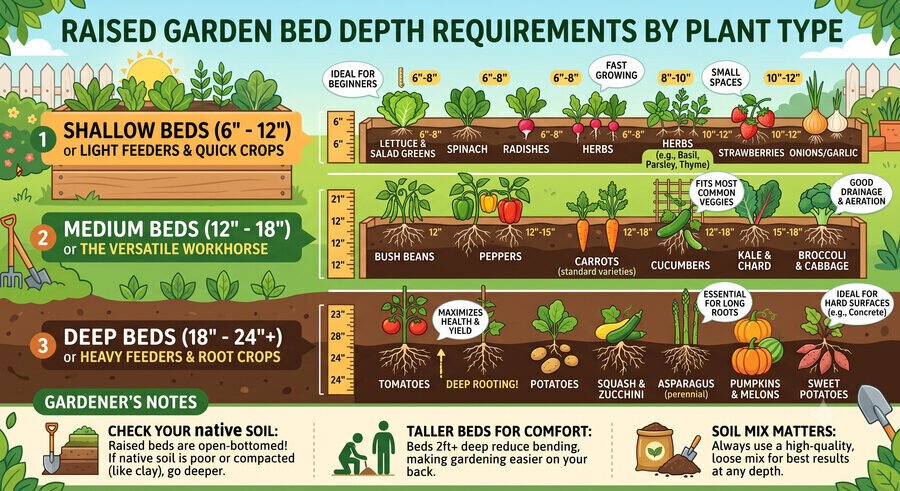
Depth for what you’re growing. Lettuce, herbs, and shallow-rooted annuals do fine in 10-12 inches. Tomatoes, peppers, and most root vegetables want 18-24+ inches for full root development — check a bed’s actual depth, not just its footprint, before assuming it fits your planting plans.
Material and climate. Aluzinc and galvanized steel resist UV fading and hold their shape for decades. Their reflective coated surface can help reduce heat absorption compared with darker materials, making it a popular choice in warmer climates. In colder, freeze-prone zones, metal still performs well overall, but expect to re-tighten fasteners annually as part of normal upkeep. Wood is cheaper and has a warmer look but needs replacing sooner, especially in wet or termite-prone climates.
Modularity vs. fixed size. If your garden layout might change, a modular system like Vego Garden’s lets you reconfigure the same panels into a new shape rather than buying an entirely new bed. A fixed-size bed like Annoell’s is simpler to assemble and doesn’t require planning out configurations in advance.
Self-watering vs. manual. A self-watering reservoir adds real convenience in hot climates or for anyone who travels, at the cost of a smaller usable soil-to-reservoir ratio and a bit more setup. For gardeners who enjoy the daily watering routine, it’s an unnecessary added cost.
Open base vs. sealed base. Open-bottom beds need to sit directly on soil for drainage and root access to the ground below. If your bed will sit on a deck, patio, or balcony, you need a sealed-base or lined design — don’t assume every raised bed works on a hard surface.
Our verdict
Most homeowners with in-ground yard space should lean toward the Vego Garden 10-in-1 Jumbo Modular if the budget allows — it offers the best balance of durability, reconfigurability, and planting depth, and its hot-climate performance is a genuine edge for anyone in the Sun Belt. Gardeners who want solid depth and capacity without Vego’s modular price tag should go with the Annoell Galvanized bed — it’s not the cheapest option in the category, but it’s a well-built mid-range choice that handles a wider range of crops than a basic starter kit. Patio and deck gardeners are better served by the LEETOLLA Elevate specifically, since most of the other picks here assume in-ground placement. If the traditional wood look matters more to you than maximum lifespan, Infinite Cedar is the standard choice.
Frequently asked questions
How deep does a raised garden bed need to be? It depends on what you’re growing. Shallow-rooted crops like lettuce, spinach, and most herbs do fine in 10-12 inches. Tomatoes, peppers, squash, and root vegetables like carrots need 18 inches or more for healthy root development. When in doubt, a deeper bed accommodates a wider range of plants than a shallow one.
Do metal raised beds get too hot for plant roots? Generally no. While bare metal might seem like it would overheat, aluzinc and galvanized steel have high reflectivity, which can help reduce heat absorption compared with darker wood, plastic, or concrete beds. This is one reason metal beds are often preferred by growers in hot, high-UV climates (roughly USDA zones 7-11).
How long do raised garden beds actually last? Aluzinc and galvanized steel beds are commonly rated for 20+ years with proper care (keeping soil pH in a neutral 6-7 range, re-tightening fasteners annually, and avoiding fresh manure or salt-based de-icers that can accelerate corrosion). Well-built cedar wood beds typically last 7-10 years before needing replacement, depending on climate and moisture exposure. Basic budget wood or thin plastic beds may need replacing within just a few seasons.
Can I put a raised garden bed directly on my deck or patio? Yes, but you need a design built for it. A fully sealed-base bed keeps soil and water fully contained; an elevated bed on legs (like LEETOLLA’s) works too, though most of these still have drainage holes and benefit from a waterproof saucer or tray underneath. Standard open-bottom raised beds set directly on a hard surface are the ones to avoid — they’re designed to sit on soil and will let water and dirt through onto a deck or patio.
Is a self-watering raised bed worth the extra cost? It depends on your climate and schedule. In hot, dry climates or for anyone who travels frequently, a self-watering reservoir can meaningfully reduce plant stress from missed waterings. For gardeners in milder climates who enjoy daily garden time, the added cost and reduced soil-to-reservoir ratio may not be worth it.
Related reading
If you’re building out a full growing setup, a couple of related guides are worth a look: our drip irrigation vs. sprinkler systems guide covers how to water raised beds efficiently, and our rainwater harvesting legality guide is worth checking before setting up a rain barrel to feed them. We’ll also link out to our Best Containers for Vegetable Gardening and Best Vertical Garden & Trellis Systems posts once those are published.
How we put this comparison together
This roundup is built from published manufacturer specifications, verified retailer listings, and aggregated third-party test data and owner feedback for each model — not from in-house hands-on testing at this time. Where a claim comes from a manufacturer spec sheet rather than independent verification, we’ve noted it as such. As we complete hands-on testing on individual beds, we’ll update this post with our own first-hand notes. We’ll also review this guide periodically to reflect product updates, pricing changes, and new models as they become available.
Last price checked: July 2026. Next in this series: Best Containers for Vegetable Gardening, and Best Vertical Garden & Trellis Systems.
Sources referenced
- https://www.vegogarden.com/products/4-pack-17-tall-10-in-1-modular-metal-raised-garden-bed-kit
- https://www.amazon.com/Vego-garden-Modular-Planter-Vegetables/dp/B0CKN427F7
- https://www.amazon.com/Annoell-Galvanized-Strawberry-Gardening-Zn-Al-Mg/dp/B0FNRYQG37
- https://www.annoell.com/products/6-pack-18-tall-6x2x1-5-ft-raised-garden-bed-kits
- https://www.amazon.com/Quictent-6x3x1Ft-Galvanized-Watering-Vegetables/dp/B0C23GLHLW
- https://www.amazon.com/LEETOLLA-Elevated-Moveable-Vegetables-Backyard/dp/B0B6HMWL2Q
- https://www.amazon.com/Infinite-Cedar-Deep-Raised-Garden/dp/B07WNXVHZR
- https://www.nbcnews.com/select/shopping/best-raised-garden-beds-rcna261706
- https://www.anleolife.com/blogs/news-1/metal-vs-plastic-raised-garden-beds-which-lasts-longer-in-a-hot-climate
- https://frameitall.com/blogs/frame-it-all/problems-with-metal-raised-garden-beds
The GoEfte editorial team researches and compares yard, garden, and water products, drawing on manufacturer specs, horticultural extension guidance, and verified owner reviews to help homeowners choose the right gear for their space and budget.