Researched and reviewed by the GoEfte editorial team Last updated: August 11, 2026 · Prices and availability verified as of publish date.
Quick answer
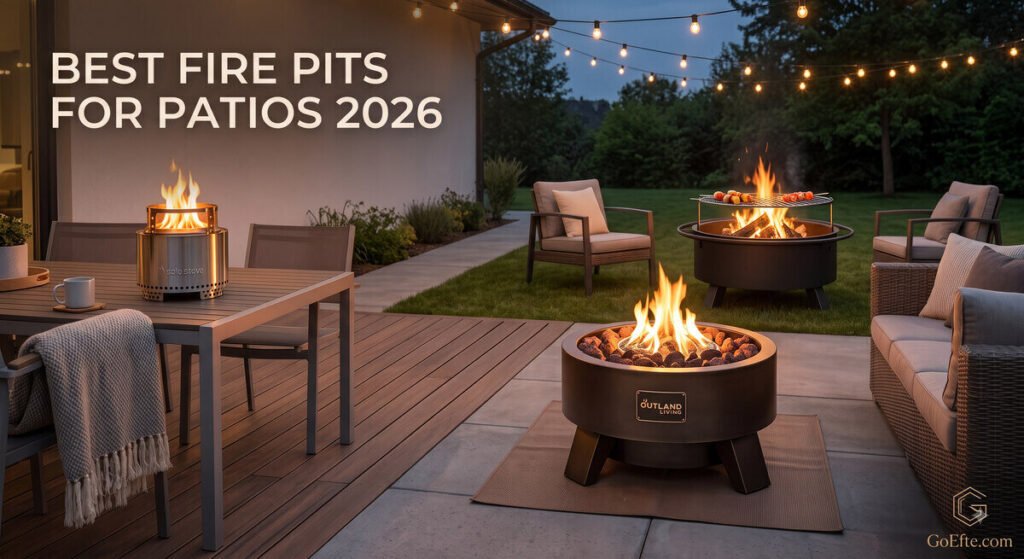
For best fire pits for patios, the biggest decision isn’t brand — it’s fuel type. Propane fire pits (Outland Living, Ciays) light instantly, produce no smoke or ash, and work in areas with wood-burning restrictions, but need a propane tank and generally cost more per BTU of heat. Wood-burning smokeless fire pits (HGD) deliver a more traditional campfire experience with genuinely reduced smoke thanks to double-wall secondary combustion, at a lower price point, but require more cleanup and aren’t permitted everywhere. For small spaces or tabletop use, Solo Stove Mesa XL brings real flame to a patio table without a wood or propane setup. Our overall pick for most patios is the Outland Living 19-inch Portable Propane Fire Pit — CSA-certified, 58,000 BTU, and genuinely portable.
Table of contents
- Propane vs. wood-burning: which fits your patio
- Top picks at a glance
- The picks, one by one
- Understanding fire pit BTU and safety certifications
- Frequently asked questions
- How we put this comparison together
Propane vs. wood-burning: which fits your patio
This is the real fork in the road for best fire pits for patios, and it matters more than any brand comparison.
Propane fire pits ignite instantly with no fire-starting materials needed, and produce no smoke, ash, or embers. Propane fire pits may be treated differently from wood-burning fires under local burn restrictions, but rules vary by jurisdiction — check your local fire authority before relying on one during a burn ban. The tradeoff: you need a standard propane tank (usually sold separately), and total heat output is capped by the unit’s BTU rating in a way a wood fire isn’t.
Wood-burning fire pits, especially newer smokeless designs using double-wall secondary combustion, deliver a more traditional fire experience — the crackle, the visible flame variation, the smell — at a generally lower upfront cost. They do produce some smoke (genuinely less than a traditional open fire pit, but not zero) and require more cleanup, plus check local regulations, since some municipalities and HOAs restrict or ban wood-burning fire pits entirely regardless of smokeless design.
Tabletop fire pits are a third category worth considering separately — smaller, fuel-flexible units built to sit directly on an outdoor dining table, providing ambiance and modest warmth rather than serving as a primary heat source for a group.
We compared current specifications, retailer listings, and available third-party feedback for models from Outland Living, Ciays, Solo Stove, and HGD against what matters most for patio use specifically: real BTU output, portability, cleanup effort, and safety certification.
Top picks at a glance
These are our editorial picks, based on published specifications, price positioning, included features, and intended use — not a lab-style performance ranking, since we haven’t hands-on tested these units.
| Category | Model | Fuel | Best for |
|---|---|---|---|
| Best overall | Outland Living Portable Propane Fire Pit (19″) | Propane | Most patios, instant lighting |
| Best budget propane | Ciays Large Propane Fire Pit (19″) | Propane | Lower cost, still CSA-certified |
| Best tabletop | Solo Stove Mesa XL | Wood/pellet | Small patios, dining tables |
| Best wood-burning (compact) | HGD 20″ Smokeless Firepit | Wood | Traditional fire feel, smaller groups |
| Best wood-burning (large) | HGD 28″ Smokeless Fire Pit with Grill Rack | Wood | Larger groups, cooking option |
The picks, one by one
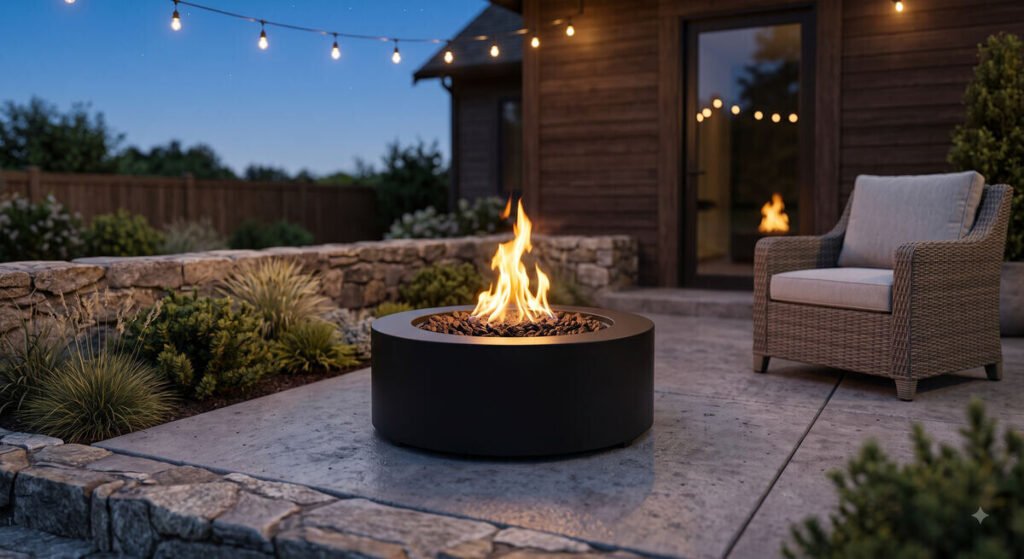
Best overall: Outland Living Portable Propane Fire Pit (19-inch, 893 Deluxe)
Outland Living’s 19-inch firebowl delivers 58,000 BTU of output from a standard 20 lb propane tank (not included), with a stainless steel burner and CSA certification — a recognized independent safety accreditation worth looking for on any propane fire pit. For propane fire pits generally, look for a recognized safety certification such as CSA or UL/ETL where applicable, and follow local fire regulations and the manufacturer’s installation requirements. It includes a fire pit cover and carry kit, making it genuinely portable between patio, camping trips, and tailgating rather than a fixed backyard-only piece.
Good for: most patios wanting instant, smoke-free fire with genuine portability and safety certification. Skip if: you want the traditional look and feel of a real wood fire — a propane flame, however good, doesn’t fully replicate that.
Best budget propane: Ciays Large Propane Fire Pit (19-inch)
Ciays matches Outland’s core specs closely — 58,000 BTU, CSA certification, folding legs for portability, a preassembled 10-foot gas hose — at a generally lower price point. It includes a piezo electric ignition (push and hold, no batteries needed) and a flameout protection feature that automatically shuts off the fire pit if wind, rain, or low oxygen extinguishes the flame, which is a genuine safety feature beyond what some competitors include at this price.
Note: stock on this specific listing was limited at the time of writing (under 20 units) — worth checking current availability before assuming it’ll still be there when you’re ready to buy.
Good for: budget-conscious buyers who still want CSA certification and real safety features, not just a cheaper price. Skip if: you want a larger firebowl for bigger gatherings — 19 inches suits smaller groups.
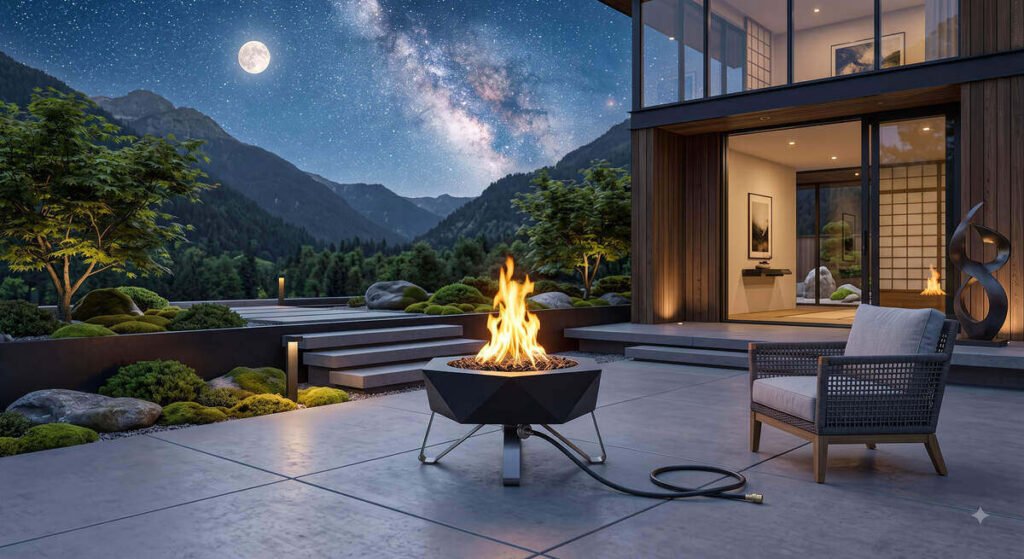
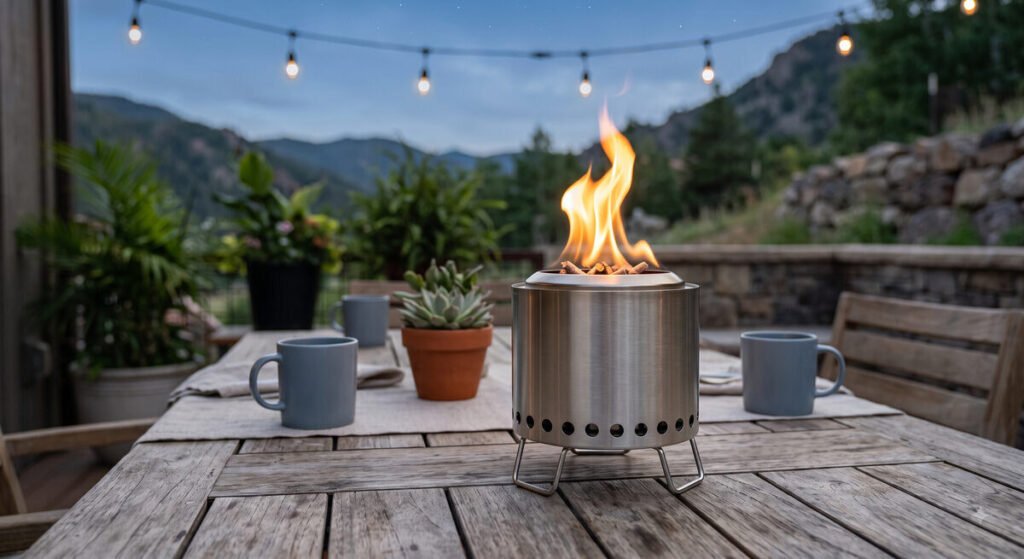
Best tabletop: Solo Stove Mesa XL
Solo Stove’s Mesa XL brings the brand’s signature 360° airflow smokeless technology to a compact, 7-inch tabletop format — genuinely usable directly on an outdoor dining table rather than needing floor space. Dual-fuel capability (wood or pellets via a built-in adapter) and a stable included stand round it out. At 2.3 lbs, it’s light enough to move between a dining table and a side table depending on the evening.
Good for: small patios, balconies, or anyone who wants fire-table ambiance without a full-size fire pit’s footprint or heat output. Skip if: you need real heat output for a cold evening — this is an ambiance piece more than a primary heat source.
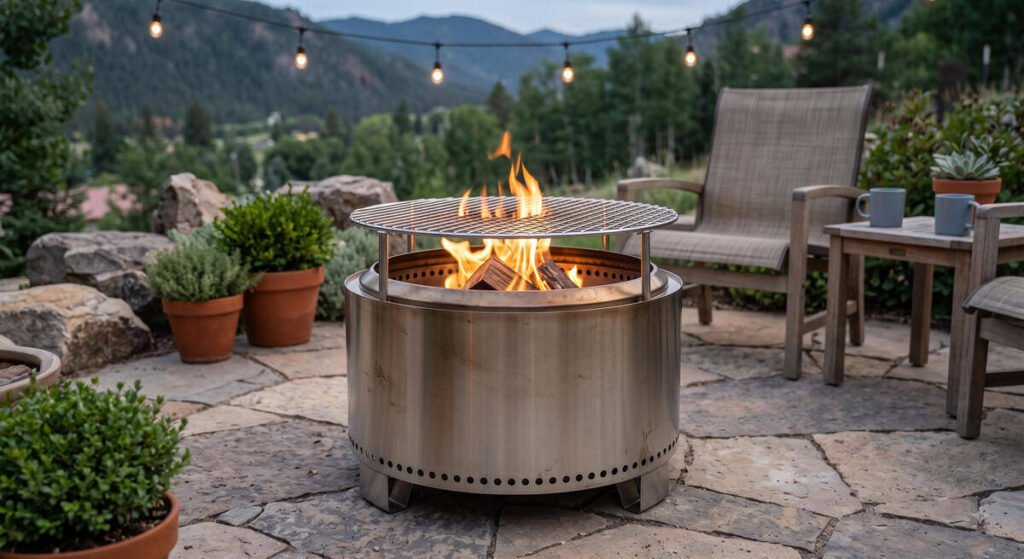
Best wood-burning (compact): HGD 20″ Smokeless Firepit with Stand
HGD’s 20-inch model uses the same double-wall, 360° airflow principle popularized by premium wood-burning smokeless brands, at a meaningfully lower price point. Reviewers consistently describe it as comparable in airflow performance to pricier competitors, with the expected caveat that no wood-burning fire pit is fully smokeless — you’ll still see some smoke at initial lighting, and the stainless steel will discolor with use, which owners note is normal and expected rather than a defect.
Good for: buyers who want the traditional wood-fire experience with genuinely reduced smoke, at a lower price than premium smokeless brands. Skip if: you want zero cleanup — wood-burning still means ash and occasional discoloration, even with secondary combustion.
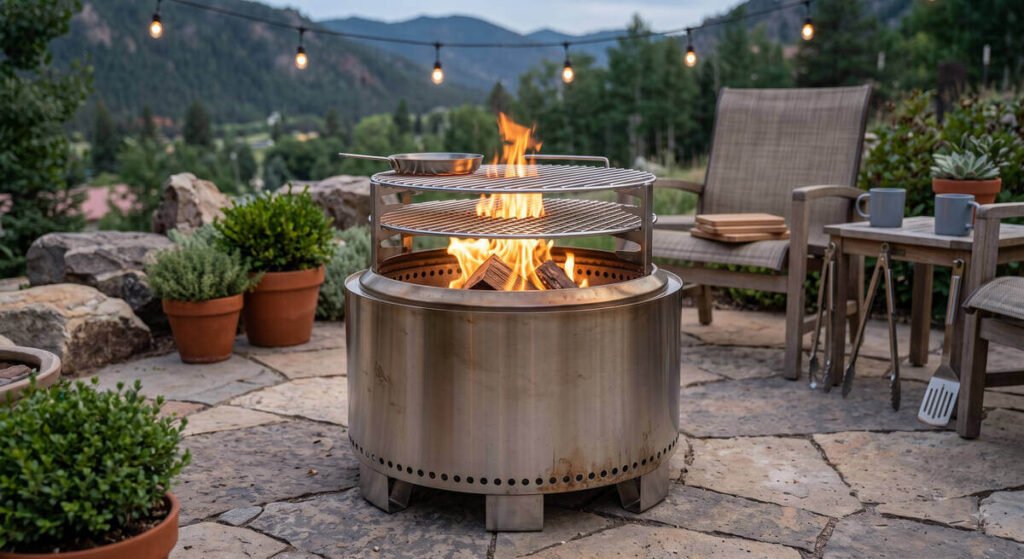
Best wood-burning (large): HGD 28″ Smokeless Fire Pit with Stand & Grill Rack
The larger sibling to HGD’s 20-inch model, this version steps up in capacity for bigger gatherings and adds a grill rack, letting the same unit double as basic outdoor cooking equipment. Construction follows the same double-wall secondary-combustion approach, with a stand included for stability and airflow.
Good for: larger groups, or anyone who wants the option to cook over the fire occasionally. Skip if: you have limited storage or a smaller patio — the larger size is a genuine step up in footprint from the 20-inch version.
Understanding fire pit BTU and safety certifications
BTU (British Thermal Units) measures heat output for propane fire pits specifically — higher isn’t automatically better, since a BTU rating that’s too high for your patio size can be uncomfortably hot at close range. Most residential propane fire pits in the 40,000–60,000 BTU range suit typical patio use; anything higher starts moving into commercial or very large gathering-space territory.
CSA certification (Canadian Standards Association, recognized in the US as well) is an independent safety accreditation specifically relevant to propane fire pits — it confirms the unit meets tested safety and manufacturing standards. Certification requirements and local burn-ban rules are separate regulatory questions that vary considerably by jurisdiction, so treat CSA/UL/ETL certification as a genuine safety signal, and check your local fire authority separately for burn-ban and permit rules that apply to your specific area.
Wood-burning fire pits don’t carry the same certification system, but “smokeless” or “secondary combustion” design (double-wall construction that redirects heated air to burn off smoke before it escapes) is the feature to look for if reduced smoke matters to you — genuine double-wall airflow designs measurably reduce smoke compared to a basic open metal bowl, even though no wood fire is ever fully smoke-free.
Frequently asked questions
Is a propane or wood-burning fire pit better for a patio? It depends on priorities. Propane lights instantly, produces no smoke or ash, and is often permitted during burn bans — better for convenience and areas with wood-burning restrictions. Wood-burning delivers a more traditional fire experience and generally costs less upfront, but requires more cleanup and isn’t always permitted locally. Check your area’s specific regulations before choosing either.
What does CSA certification actually mean for a propane fire pit? It’s an independent third-party safety accreditation confirming the unit meets tested manufacturing and safety standards. It’s a separate question from local burn-ban and permit rules, which vary by jurisdiction — check both the certification and your local fire authority’s current regulations before use.
Can I use a fire pit on a wood deck? Generally not directly — most manufacturers recommend a heat-resistant pad or mat underneath any fire pit, wood-burning or propane, when placed on a wooden deck or other heat-sensitive surface, due to radiant heat risk even from an elevated unit. Check your specific fire pit’s manual for placement guidance.
How much heat can I expect from a 58,000 BTU propane fire pit? A 58,000-BTU propane fire pit can provide substantial radiant heat for people sitting nearby, but actual warmth varies considerably with wind, ambient temperature, burner design, and distance from the flame. Treat published BTU figures as a starting point for comparison between models, not a guaranteed real-world temperature.
Do smokeless wood-burning fire pits actually produce zero smoke? No — “smokeless” describes a meaningful reduction via double-wall secondary combustion design, not the complete elimination of smoke. Expect some smoke at initial lighting and occasionally depending on wood dryness and wind conditions, but noticeably less than a traditional open fire pit throughout the burn.
How we put this comparison together
This roundup is based primarily on published manufacturer specifications and current retailer listings — not from in-house hands-on testing at this time. Where a claim reflects a manufacturer’s own performance statement or aggregated owner review sentiment rather than something we’ve independently verified, we’ve identified it as such. As we complete hands-on testing on individual fire pits, we’ll update this post and link out to full individual reviews with our own first-hand notes.
Further reading
- Our Patio Furniture Buying Guide for seating to pair with your fire pit setup.
- Our How to Choose Patio Furniture That Survives Your Climate guide, relevant if you’re furnishing the whole space at once.
Sources referenced
- https://www.amazon.com/Outland-Firebowl-893-Portable-Diameter/dp/B00KY4S388
- https://www.amazon.com/Ciays-Propane-Folding-Certified-Portable/dp/B0D5QG87V2
- https://www.amazon.com/Solo-Stove-Mesa-XL-Stainless/dp/B0BV6D2GYX
- https://www.amazon.com/HGD-Smokeless-Stainless-Gatherings-Combustion/dp/B0GQGY8FSK
- https://www.amazon.com/HGD-Smokeless-Stainless-Gatherings-Combustion/dp/B0GGC85HZ4
Note: prices and availability on Amazon fluctuate frequently. We verify links prior to publishing, but please check the current price on the live page.
The GoEfte editorial team researches and compares yard, garden, and water products, drawing on manufacturer specs, horticultural extension guidance, and verified owner reviews to help homeowners choose the right gear for their space and budget.