Most patio furniture is bought in a showroom or on a product page, where every material looks equally durable. The real test comes after three winters, five summers of UV exposure, and however many rainstorms your region gets in between — and that’s where the wrong material shows up as rust, cracked wicker, or cushions that mildew from the inside out. The material that survives your neighbor’s yard three states away isn’t necessarily the one that survives yours.
Key takeaways
- Climate should decide your material before style does — a coastal yard, a humid yard, and a freeze-thaw yard each punish different materials in different ways.
- Powder-coated aluminum is the most broadly climate-tolerant metal — rust-proof by nature since it contains no iron, though near the coast even a chipped powder coating can start localized surface oxidation.
- Teak is the most weather-resistant natural wood thanks to its own natural oils, but it still needs periodic cleaning or oiling to keep its look, and it’s a real up-front investment.
- All-weather wicker quality varies enormously — cheap PVC-based wicker can crack and unravel within 2–5 years, while premium HDPE (high-density polyethylene) wicker with UV inhibitors holds up far longer.
- Cushion fabric matters as much as frame material — a great frame paired with a cheap cushion fabric still means moldy, faded cushions within a season or two in humid climates.
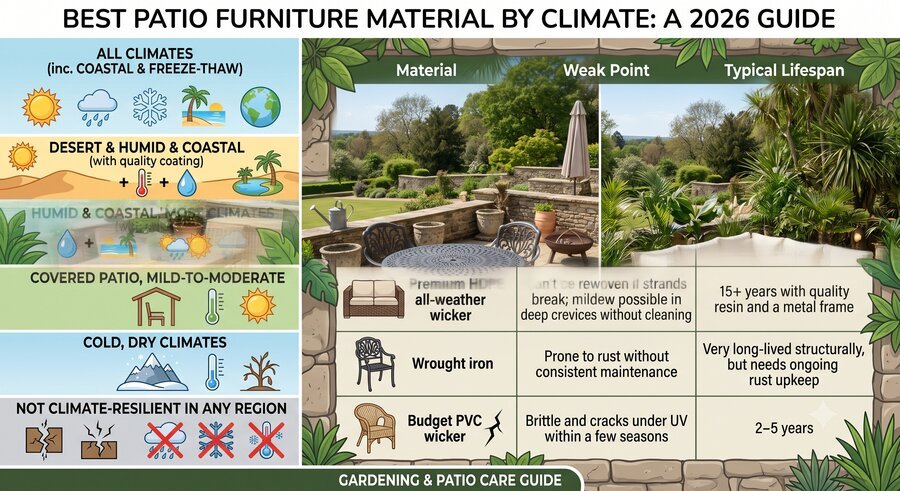
Patio furniture materials, compared by climate
| Material | Best climate fit | Weak point | Typical lifespan |
|---|---|---|---|
| Powder-coated aluminum | Desert, humid, coastal (with quality coating) | Coating chips can lead to localized oxidation; retains heat in full sun | 15–25 years inland, roughly half that directly on the coast |
| Teak | Humid, coastal, most climates with upkeep | Needs periodic cleaning/oiling to maintain color; algae in humid, shaded spots | Decades with maintenance; among the longest-lived natural woods |
| Premium HDPE all-weather wicker | Covered or partially covered patios, mild-to-moderate climates | Can’t be rewoven if strands break; mildew possible in deep crevices without cleaning | 15+ years with quality resin and a metal frame |
| Budget PVC wicker | Not climate-resilient in any region | Brittle and cracks under UV within a few seasons | 2–5 years |
| Wrought iron | Cold, dry climates | Prone to rust without consistent maintenance | Very long-lived structurally, but needs ongoing rust upkeep |
| HDPE poly lumber (marine polymer) | All climates, including coastal and freeze-thaw | Higher upfront cost | 20+ years, minimal maintenance |
How to actually choose: a decision framework
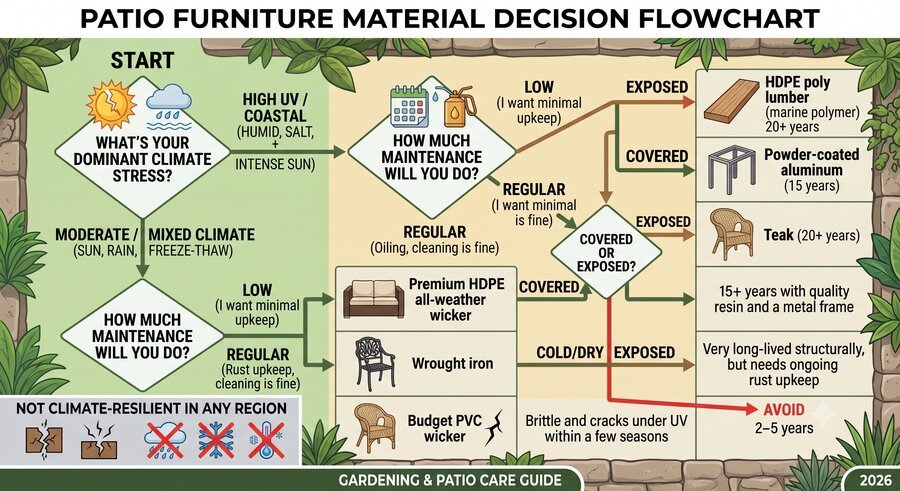
- What’s the dominant weather stress in your yard — salt air, humidity, sun, or freeze-thaw? This is the single most important question, and it’s climate-specific rather than generic “durability.” A material rated “durable” in a lab sense can still fail fast if it’s the wrong kind of durable for your conditions.
- Coastal / salt air: When searching for the best patio furniture material for coastal climate, look to powder-coated aluminum and HDPE-based materials (wicker or poly lumber), since neither contains iron to corrode. Avoid untreated or lightly coated steel and lower-grade aluminum finishes, since salt air accelerates any coating failure.
- Humid climates: If you’re shopping for patio furniture for humid climates, teak and marine-grade HDPE resist moisture well. However, humid, shaded corners of a patio are where algae and mildew show up first regardless of material — plan for periodic cleaning either way.
- Desert / high-UV climates: UV resistance matters more than moisture resistance here. Premium HDPE wicker with UV inhibitors and powder-coated aluminum both hold color well; budget PVC wicker is the first material to fade and go brittle.
- Cold / freeze-thaw climates: Materials that don’t absorb water — aluminum, HDPE poly lumber, quality HDPE wicker — avoid the cracking that comes from water expanding inside a material through repeated freeze-thaw cycles. This is a real weak point for lower-density woods and cheaper resins.
2. How much maintenance are you actually willing to do? Teak looks its best with occasional oiling or cleaning; skip that and it weathers to a silvery-gray patina that some owners like and others don’t. Aluminum and quality HDPE are close to zero-maintenance beyond a periodic hose-down. Wrought iron needs the most ongoing attention to prevent rust. Be honest about which category you’re actually in before you buy.
3. Is the patio covered, partially covered, or fully exposed? A covered porch or screened patio meaningfully reduces UV and rain exposure, which widens your material options — this is where lower-tier wicker or natural rattan can still work reasonably well. Fully exposed patios should default to the more weather-resilient materials regardless of climate, since they’re taking the full brunt of sun and rain year-round.
4. What’s your realistic budget, amortized over years? A $400 wicker set that needs replacing in three years is a worse long-term deal than an $1,100 teak or aluminum set that lasts fifteen to twenty-five. Run the cost-per-year math the same way you would for any other outdoor purchase, rather than anchoring on the sticker price alone.
Expert tip
Check the powder coat, not just the metal, when evaluating aluminum furniture. Aluminum itself doesn’t rust since it contains no iron, but a chipped or scratched powder coating exposes the metal underneath to surface oxidation over time — the dull, chalky residue owners sometimes mistake for rust. Higher-quality manufacturers apply a double or triple powder coat, which also happens to reduce how hot the metal gets in direct sun. If you’re shopping aluminum for a coastal or high-sun yard specifically, ask about coating thickness before assuming “aluminum” alone guarantees longevity.
Materials worth knowing about
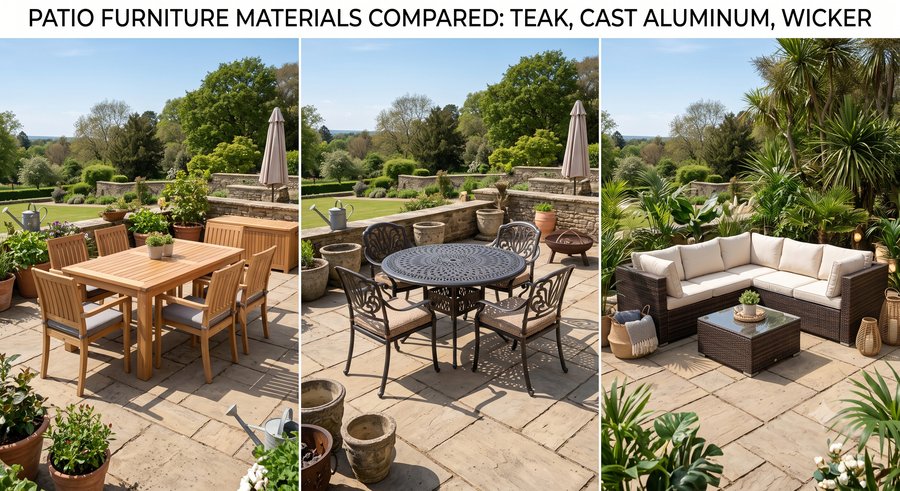
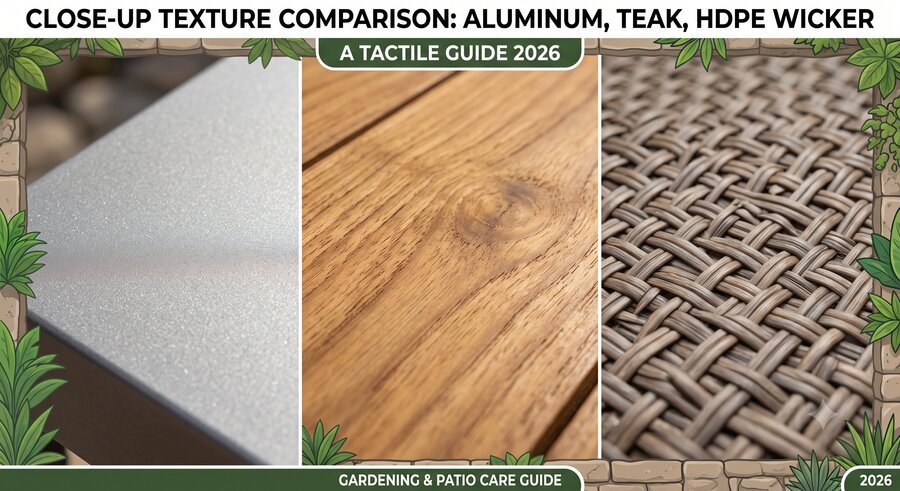
When comparing teak vs aluminum vs HDPE wicker, premium teak and cast aluminum dominate the top tier of this category. Brands like Summer Classics, Lloyd Flanders, and Frontgate build their reputations on these two materials specifically because they hold up across the widest range of climates with the least long-term degradation, at a correspondingly premium price point.
All-weather wicker durability varies more by resin quality than almost any other material category here. It sits in the middle of the market — the same-looking wicker set can be built on cheap PVC or premium UV-stabilized HDPE, and the difference in lifespan between the two is measured in years, not degrees of quality. Always ask specifically what resin the wicker is made from before buying.
Budget fire pit and seating bundles — brands like Aoxun and PHI VILLA sit at the accessible end of the market, prioritizing function and price over the material longevity of the premium tier. These are a reasonable entry point for a first patio setup or a rental, with the expectation that the furniture’s realistic lifespan is shorter than premium teak or aluminum.
Cushion fabric deserves its own line of attention separate from the frame. Solution-dyed acrylic fabrics (the category Sunbrella is best known for) resist fading and mildew far better than standard outdoor-labeled polyester, since the color is woven into the fiber itself rather than applied as a surface treatment. In humid climates especially, cushion fabric quality often determines how the furniture looks after two summers more than the frame material does.
Further reading
- EPA UV Index — useful for gauging how much UV stress your region puts on outdoor materials.
NOAA Climate.gov— regional climate data for coastal, humid, and freeze-thaw zone reference.- Consumer Reports: Outdoor Furniture — independent testing background on outdoor furniture materials and finishes.
Frequently asked questions
What’s the best patio furniture material for a coastal climate?
Powder-coated aluminum and HDPE-based materials (wicker or poly lumber) are the strongest choices near salt air, since neither contains iron to corrode. If choosing aluminum, look for a thick, high-quality powder coat, since coastal salt air accelerates corrosion anywhere the coating is chipped or thin.
Is teak or aluminum better for outdoor furniture?
In the cast aluminum vs teak outdoor furniture debate, both hold up well across most climates. Teak offers a warmer, natural look and ages into a silvery patina if left unoiled, but needs periodic upkeep to maintain its original color. Aluminum is lighter, essentially maintenance-free, and slightly better suited to coastal environments if the powder coat is high quality.
Does all-weather wicker actually survive outdoors?
It depends entirely on the resin. Premium HDPE wicker with UV inhibitors, built over a metal frame, can last 15+ years. Budget PVC-based wicker degrades much faster — often within 2–5 years — since it lacks the UV stabilization of higher-grade resin.
Do I need furniture covers if I buy weather-resistant materials?
Covers extend the life of any material, even the most weather-resistant ones, mainly by reducing UV exposure and keeping standing water off cushions and crevices. They matter most for wicker (to prevent mildew in tight weaves) and least for aluminum and HDPE poly lumber, which tolerate direct exposure well on their own.
How much more does climate-appropriate furniture cost upfront?
Premium materials like teak, cast aluminum, and quality HDPE typically cost more than budget wicker or basic steel bundles, but the gap often closes or reverses when measured per year of use, since budget materials in a harsh climate may need full replacement within a few seasons.
How we put this guide together
This guide is built from manufacturer material specifications, published durability comparisons, and climate-performance guidance from outdoor furniture industry sources — not from in-house hands-on testing at this time. Where a claim comes from a manufacturer spec sheet or a single published source rather than something we’ve independently verified, we’ve tried to frame it that way. As we complete hands-on testing on individual furniture lines, we’ll update this guide and link out to full individual reviews.
The GoEfte editorial team researches and compares yard, garden, and water products, drawing on manufacturer specs, horticultural extension guidance, and verified owner reviews to help homeowners choose the right gear for their space and budget.