If you’re starting a vegetable garden this season, the first real decision in the raised bed vs container gardening debate isn’t which tomato variety to plant — it’s whether you’re building raised beds or gardening in containers. Both get you out of fighting your native soil, but they solve different problems, and picking the wrong one for your space usually shows up later as poor drainage, root-bound plants, or a garden you stop using because it was more work than it needed to be.
Key takeaways
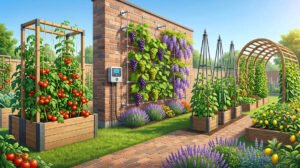
- Raised beds suit anyone with a fixed patch of ground who wants to grow multiple crops together, build soil over years, and maximize yield per square foot.
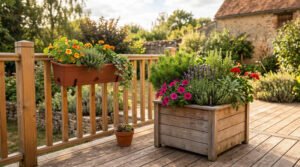
- Containers suit renters, patios, balconies, and anyone who needs to move plants for sun, frost, or a lease that doesn’t allow permanent structures.
- Depth matters more than most first-time gardeners expect — shallow herbs are forgiving, but tomatoes, carrots, and other deep-rooted crops fail in anything under about 12 inches of soil.
- Metal beds (galvanized or Aluzinc-coated steel) now dominate the premium raised bed tier because they last 15–20+ years, versus roughly 5–10 years for untreated cedar and less for basic plastic.
- Cost per year, not sticker price, is the number that matters — a $300 metal bed that lasts 20 years is often cheaper annually than a $60 wood kit you replace every 4–5 years.
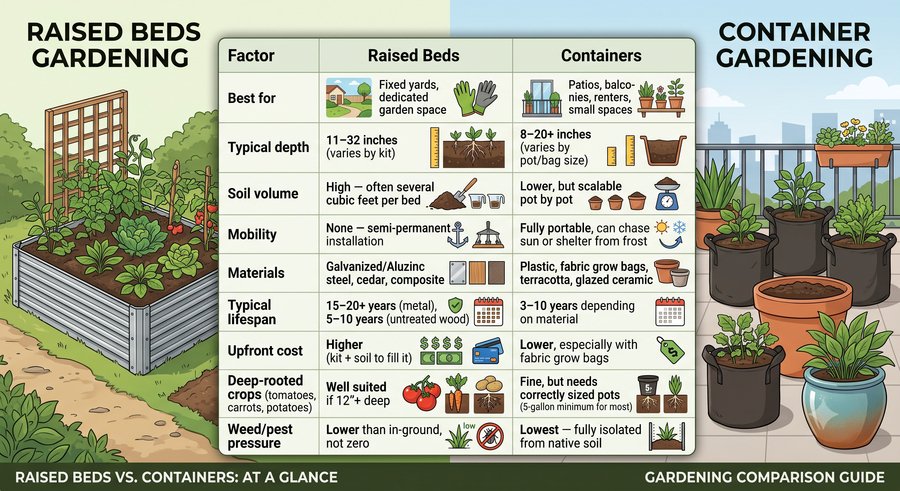
Raised beds vs containers: at a glance
| Factor | Raised Beds | Containers |
|---|---|---|
| Best for | Fixed yards, dedicated garden space | Patios, balconies, renters, small spaces |
| Typical depth | 11–32 inches (varies by kit) | 8–20+ inches (varies by pot/bag size) |
| Soil volume | High — often several cubic feet per bed | Lower, but scalable pot by pot |
| Mobility | None — semi-permanent installation | Fully portable, can chase sun or shelter from frost |
| Materials | Galvanized/Aluzinc steel, cedar, composite | Plastic, fabric grow bags, terracotta, glazed ceramic |
| Typical lifespan | 15–20+ years (metal), 5–10 years (untreated wood) | 3–10 years depending on material |
| Upfront cost | Higher (kit + soil to fill it) | Lower, especially with fabric grow bags |
| Deep-rooted crops (tomatoes, carrots, potatoes) | Well suited if 12″+ deep | Fine, but needs correctly sized pots (5-gallon minimum for most) |
| Weed/pest pressure | Lower than in-ground, not zero | Lowest — fully isolated from native soil |
How to actually choose: a decision framework
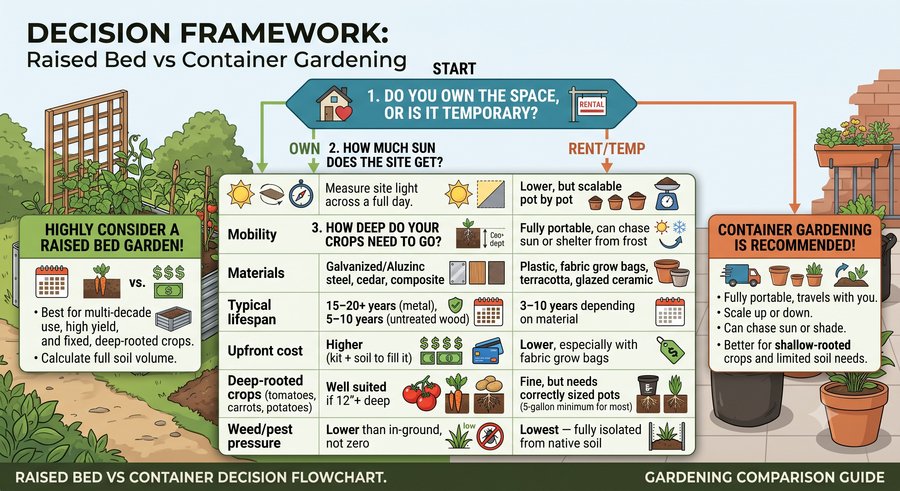
Choosing between raised bed vs container gardening comes down to five practical questions:
- Do you own the space, or is it temporary?Raised beds are a semi-permanent install — most kits bolt or slot together and aren’t meant to be broken down each season. If you’re renting, on a lease with restrictions, or planning to move within a few years, containers travel with you and leave no trace behind.
- How much sun does the space get, and does it change through the season?Containers can be shifted to chase sun in spring and pulled back from harsh afternoon heat in summer. A raised bed is locked into whatever light its location gets — measure the site across a full day before committing.
- What are you actually growing?Determining your raised garden bed depth by vegetable is the most critical step:
- Shallow crops (lettuce, herbs, radishes, most greens): 6–8 inches of soil is enough — containers handle these easily.
- Medium-depth crops (bush beans, peppers, most brassicas): look for 10–12 inches minimum.
- Deep-rooted crops (tomatoes, carrots, potatoes, squash): 12–18+ inches is the safer range; shallower setups mean stunted roots and lower yield.
- How much soil are you prepared to buy and maintain?A single 4×8-foot raised bed at 12 inches deep needs roughly 32 cubic feet of soil — that’s a real up-front cost and something to top off annually as soil settles. Containers use far less soil per unit, but you’re paying that same per-cubic-foot soil cost repeatedly across more individual pots if you’re growing a lot of different things.
- What’s your realistic budget, amortized over years, not just today?This is where raised beds often win out despite the higher sticker price. A galvanized or Aluzinc-coated steel bed is a multi-decade purchase; a basic wood kit or plastic container is a multi-year one. Run the “cost per year of use” math before assuming the cheaper up-front option is actually cheaper.
Expert tip
Don’t guess at soil volume — measure it. Think of this as your manual soil volume calculator for raised beds: Multiply your bed’s length × width × depth (in feet) to get cubic feet, then convert to cubic yards by dividing by 27 if you’re buying bulk soil rather than bagged. Most first-time raised bed owners underestimate how much soil they need by roughly a third, then either run a bed under-filled (which shows up as poor drainage and dry-out) or make an unplanned second trip.
Raised bed materials compared
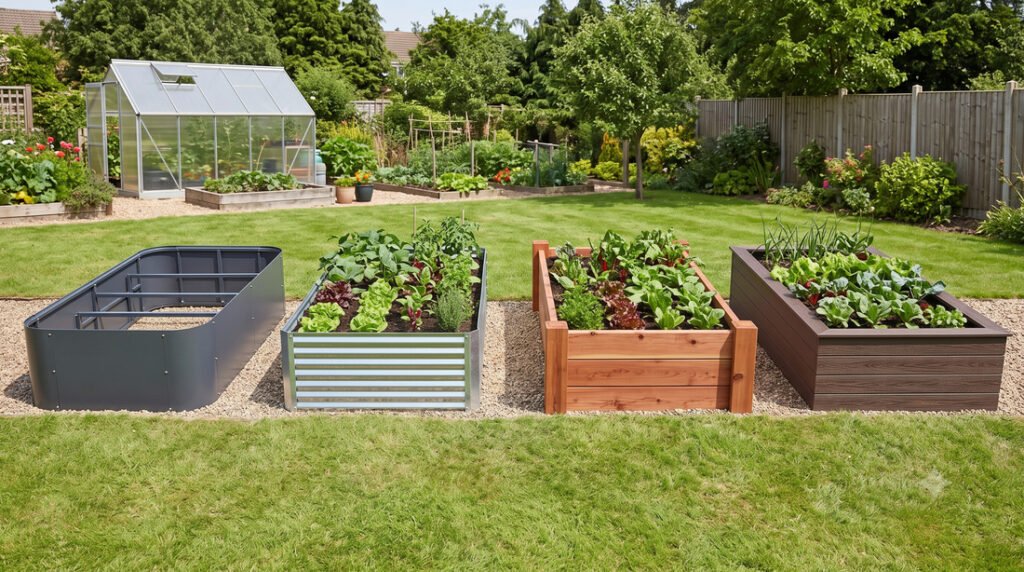
Galvanized and Aluzinc-coated steel is now the dominant material in the premium tier. Vego Garden, for example, uses a 0.6mm Aluzinc-coated steel sheet — a zinc, magnesium, and aluminum coating that the brand states is several times more corrosion-resistant than standard galvanized steel, backed by a 2-year limited warranty on the hardware itself, though the coated steel is rated to last far longer than the warranty period under normal garden conditions. Metal raised beds in this tier are typically constructed with long-lasting Aluzinc-coated steel panels finished in a food-grade, USDA-certified paint, sold as modular panel kits that bolt together into multiple configurations. Birdies is a comparable competitor in this same metal category. Both brands sit at the premium end because the material genuinely outlasts wood and plastic by a wide margin — often 15–20+ years versus 5–10 for untreated cedar.
Galvanized steel budget kits (like Land Guard) bring the corrosion-resistance benefit of metal down to a lower price point, typically with a thinner gauge steel than the premium brands. They’re a reasonable middle ground if you want metal’s longevity without paying flagship prices, though expect a shorter usable life than the thicker premium-tier steel.
Cedar remains popular for gardeners who want a natural look rather than a modern metal aesthetic. When comparing galvanized steel vs cedar raised bed options, untreated cedar kits from brands like Greenes Fence or Gardener’s Supply Company naturally resist rot better than most softwoods, but still typically need replacing within 5–10 years depending on climate and moisture exposure — noticeably shorter than metal.
Composite and plastic kits are usually the cheapest entry point and the lightest to move before assembly, but they’re also the least durable option long-term and can become brittle with UV exposure over multiple seasons.
Container materials compared
If you’re searching for the best containers for vegetable gardening, fabric grow bags have become the go-to for serious growers because the breathable fabric prevents roots from circling the pot wall (root-bound plants), which improves root health versus solid-sided pots. They also collapse flat for off-season storage, which matters if you don’t have year-round space for containers. Container gardening for small spaces relies heavily on these bags due to their low cost and high versatility.
Plastic pots are the cheapest and lightest option, widely available in every size, but offer no insulation from summer heat — soil in a dark plastic pot in full sun can run noticeably hotter than the surrounding air, stressing roots in peak summer.
Glazed ceramic and terracotta look better on a patio and hold moisture more evenly than plastic, but are heavy, breakable, and the most expensive option per pot — usually a better fit for ornamentals than a large working vegetable garden.
Further reading
- University of Maryland Extension: Raised Bed Gardening — depth and soil-mix guidance from a land-grant extension program.
- EPA WaterSense — background on efficient watering practices that apply to both raised beds and containers.
- USDA Plant Hardiness Zone Map — useful for timing what you plant in either setup based on your zone.
Frequently asked questions
Is a raised bed or a container better for tomatoes?
Either works if the depth is right. A raised bed at 12+ inches deep handles tomatoes well and lets roots spread laterally. In containers, tomatoes need at least a 5-gallon pot, with 10-gallon or larger recommended for indeterminate varieties that grow all season.
How deep does a raised bed need to be for vegetables?
It depends on the crop. Shallow greens and herbs are fine at 6–8 inches. Most common vegetables do well at 10–12 inches. Deep-rooted crops like carrots, potatoes, and tomatoes benefit from 12–18 inches or more.
Do raised beds need a bottom or liner?
Most raised beds sit directly on native soil with no bottom, which allows roots to grow down past the frame’s depth and improves drainage. A liner or hardware-cloth bottom is mainly useful if you’re placing a bed over pavement, or if burrowing pests are a known problem in your area.
Can I mix raised beds and containers in the same yard?
Yes, and it’s a common approach — use raised beds for your main crops and containers for anything that needs to move (herbs near the kitchen door, tender plants that need to come inside before frost, or crops you’re testing in a new spot before committing bed space to them).
How much does soil cost to fill a raised bed?
It varies by region and whether you buy bagged or bulk soil, but bulk garden soil/compost blends are usually meaningfully cheaper per cubic foot than bagged soil once you’re filling anything larger than a small starter bed. Measure your volume first (length × width × depth) before pricing it out, since underestimating volume is the most common budgeting mistake first-time bed owners make.
How we put this guide together
This guide is built from manufacturer specifications, horticultural extension guidance, and published material-durability data — not from in-house hands-on testing at this time. Where a claim comes from a manufacturer spec sheet rather than independent verification, we’ve noted it as such. As we complete hands-on testing on individual raised bed and container products, we’ll update this guide and link out to full individual reviews.
The GoEfte editorial team researches and compares yard, garden, and water products, drawing on manufacturer specs, horticultural extension guidance, and verified owner reviews to help homeowners choose the right gear for their space and budget.