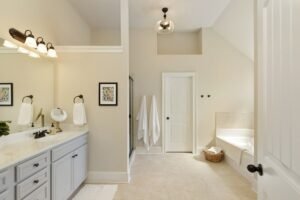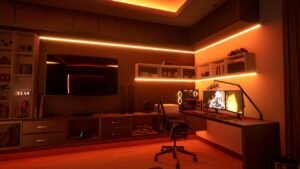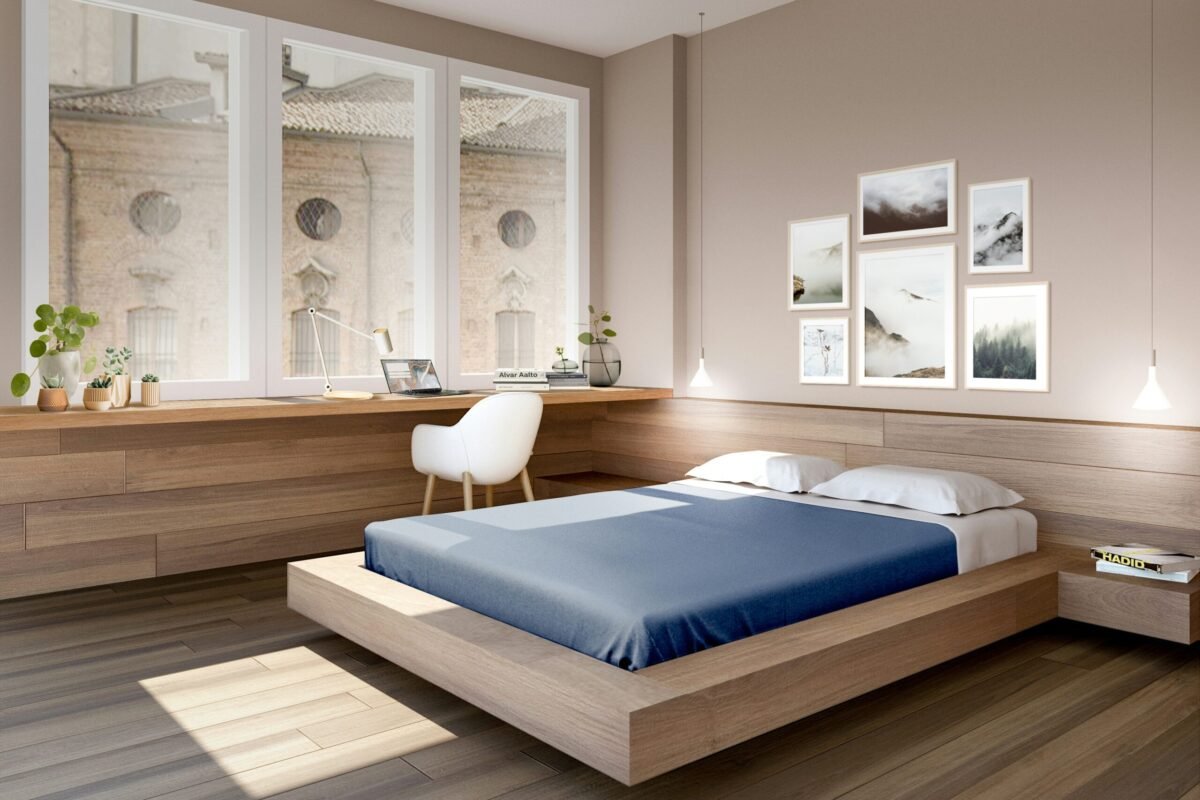
Create a peaceful sanctuary where technology disappears and deep rest takes over
Why Your Bedroom Needs a Smart Upgrade {#introduction}
Your bedroom should be designed for one thing: restorative sleep.
Yet most bedrooms work against us. Lights stay bright until we flip a switch. Temperatures fluctuate through the night. Morning arrives with a jarring alarm that shocks us awake.
Smart technology, when implemented thoughtfully, changes all of this. It creates an environment that actively supports your body’s natural rhythms—without requiring you to think about it.
The best smart bedrooms don’t look like science experiments. They look like peaceful retreats. The technology hides in plain sight, working quietly in the background while you sleep deeply.
This guide walks you through every element of a smart bedroom designed for better sleep, from evening wind-down to gentle morning awakening. You’ll learn exactly how to build your own sanctuary, regardless of your budget or technical experience.
🌆 The Perfect Sleep Environment: Evening Wind-Down {#evening}
As the sun sets, your body naturally prepares for sleep. Your smart bedroom should support this process automatically.
Automated Blackout Shades
Light is the single biggest enemy of melatonin production. Even streetlights filtering through curtains can disrupt your sleep cycle.
Smart blackout shades solve this perfectly. Programmed to close at sunset—or at a specific bedtime—they block outside light completely. The best part? They look like normal fabric shades. No one would guess they’re automated.
In the morning, they can open gradually, letting natural light help you wake. For deeper sleepers, schedule them to open at your wake time for an extra gentle nudge.
Perfect Temperature Control
Research consistently shows that cooler temperatures promote deeper sleep. Your body’s core temperature naturally drops as you prepare for rest. A warm bedroom fights this process.
A smart thermostat can automatically lower the temperature by two to three degrees at your target bedtime. Throughout the night, it maintains this ideal sleep environment. In the morning, it warms things back up so you don’t wake to a cold room.
Some advanced thermostats even learn your preferences over time, adjusting automatically based on your sleep patterns.
Ambient Sound and White Noise
Sudden noises—a car outside, a neighbor’s door, a pet moving around—can pull you out of deep sleep. Smart speakers solve this by playing consistent ambient sounds throughout the night.
Program your “Bedtime” routine to trigger gentle sounds:
- White noise for complete sound masking
- Rain sounds for a calming atmosphere
- Ocean waves for a peaceful escape
- Brown noise for deeper, richer sound coverage
The speaker can also stop the sounds at your wake time, transitioning you gently into morning.
Aromatherapy Integration
For the ultimate sleep sanctuary, consider adding a smart diffuser. Program it to release calming scents like lavender or chamomile as part of your evening routine. Some systems even adjust based on humidity levels or time of year.
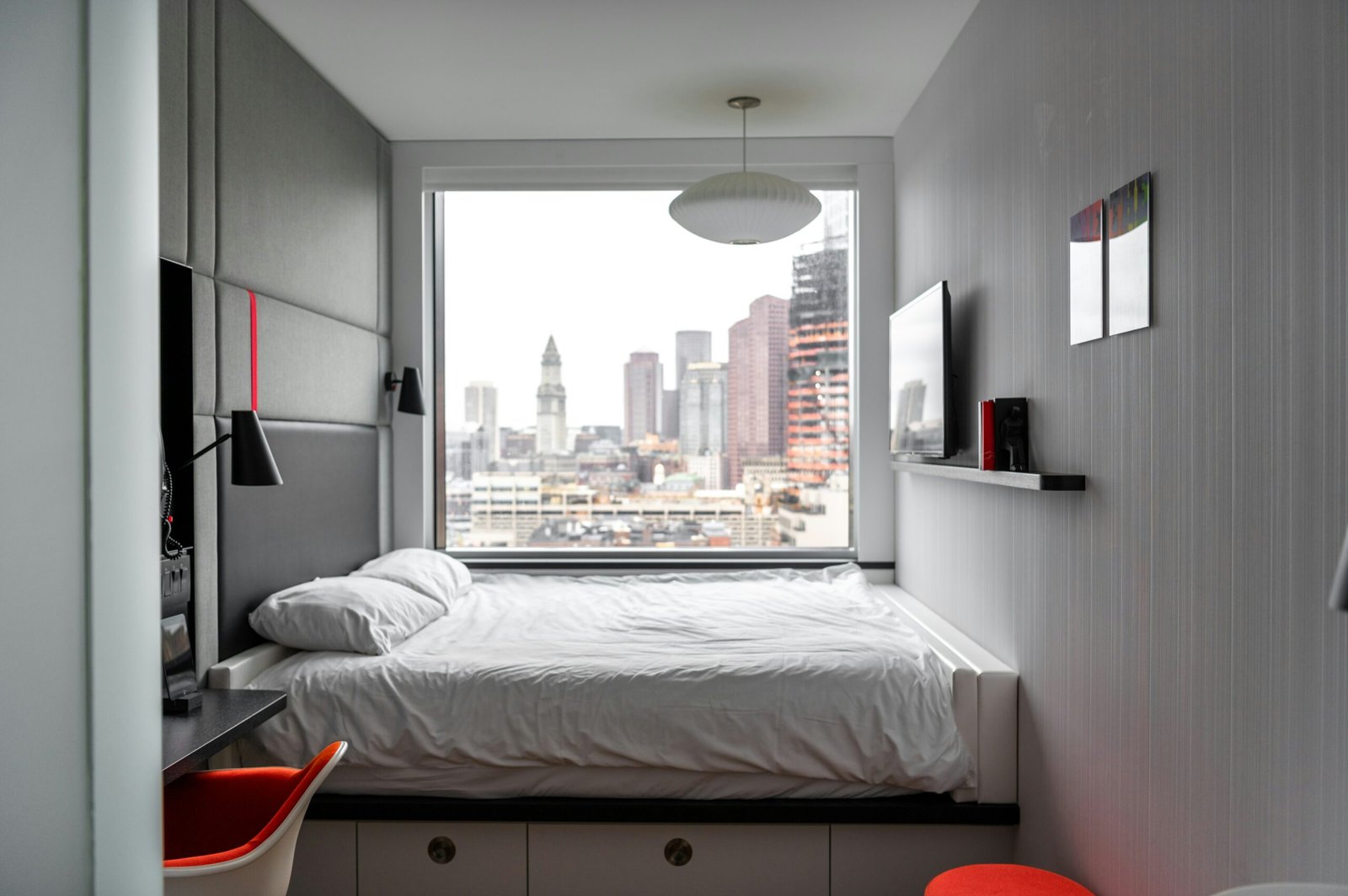
☀️ Wake Up Gently: Morning Sunrise Simulation {#morning}
How you wake matters as much as how you sleep. Traditional alarms jolt you from sleep with sudden noise. Your body releases stress hormones, and you start the day already on edge.
Sunrise Simulation Lighting
Smart bulbs with sunrise simulation offer a better way.
Program your “Wake Up” routine to begin 30 minutes before your actual alarm. The lights start at a barely perceptible 1% brightness in warm amber tones (around 2200K). Over the next half hour, they gradually brighten and shift to cooler, energizing daylight (around 5000K).
This mimics natural sunrise. Your body detects the increasing light and begins reducing melatonin production naturally. By the time your audible alarm sounds—if you even need one anymore—you’re already in a light sleep stage or nearly awake.
Gradual Sound Introduction
If you still want an audible backup, program your smart speaker to begin with gentle sounds:
- Week 1: Start with nature sounds at very low volume
- Week 2: Add soft music
- Week 3: Transition to gradually increasing volume over 10 minutes
Within a month, most people find they no longer need traditional alarms at all. The light alone wakes them naturally.
Smart Blinds for Natural Light
If you have smart blinds or shades, add them to your morning routine. Schedule them to open partially 15 minutes before wake time, letting in actual natural light. This works beautifully alongside your sunrise simulation lights.
Morning Information, Gently Delivered
Once you’re awake, your smart speaker can deliver morning information without demanding attention:
- Weather forecast for the day
- Calendar appointments
- News headlines (briefly)
- Traffic conditions
This information arrives after you’re fully awake, not as a jarring interruption.

💤 Health Monitoring: Sleep Tracking Without Wearing Anything {#health}
Sleep tracking has traditionally meant wearing something on your wrist—which many people find uncomfortable or simply forget to put on.
Under-Mattress Sleep Trackers
Advanced under-mattress sensors solve this completely. Placed beneath your mattress, they track:
- Heart rate and heart rate variability
- Breathing patterns and respiratory rate
- Movement and restlessness
- Sleep cycles (light, deep, REM)
- Time to fall asleep and wake time
You don’t feel them. You don’t charge them. You don’t think about them. They just work, night after night.
Morning Insights, Beautifully Displayed
In the morning, your sleep data appears where you’ll naturally see it—on a smart mirror as you get ready.
Your sleep score, trends, and insights display quietly. You might learn that you sleep more deeply when the room is one degree cooler, or that your resting heart rate improves after alcohol-free evenings.
Some systems integrate with your smart thermostat to adjust temperature based on your sleep stages. During deep sleep, the room stays slightly cooler. During REM, it may warm slightly. This fine-tuning happens automatically, invisibly.
Long-Term Health Trends
Over weeks and months, your sleep tracker builds a complete picture of your rest. You’ll see how different factors affect your sleep:
- Exercise timing
- Evening meals
- Screen time before bed
- Room temperature
- Stress levels
This information empowers you to make adjustments that actually improve your rest—not guesswork.
🛠️ How to Build Your Own Smart Sleep Sanctuary {#how-to-build}
Building this environment doesn’t require a complete renovation or a massive budget. Start with these core elements and expand as you discover what works for you.
Step 1: Start with Lighting
Lighting has the biggest impact on sleep for the smallest investment. Begin with:
One smart bulb in your bedside lamp. Choose a tunable white bulb that can shift from cool daylight to warm amber and dim smoothly to 1%. This single bulb lets you experience sunrise simulation and evening wind-down.
Recommended: Philips Hue White Ambiance, Nanoleaf Essentials, or Cync tunable bulbs.
For a deeper dive into lighting science and bulb selection, read our complete Ultimate Guide to Smart Lighting.
Step 2: Add a Smart Speaker
A smart speaker provides sound, voice control, and routines. Place it on your nightstand or dresser.
Choose based on your ecosystem:
- Apple users: HomePod Mini
- Google users: Nest Audio or Nest Hub
- Alexa users: Echo Dot or Echo Show 5
Your speaker will run your “Bedtime” and “Wake Up” routines, play ambient sounds, and deliver morning information.
Step 3: Install a Smart Thermostat
If you have central heating and cooling, a smart thermostat transforms your sleep environment. It learns your preferences, adjusts automatically, and can save energy while improving rest.
Top picks: Google Nest Thermostat, Ecobee SmartThermostat with room sensors.
Step 4: Consider Smart Shades
Smart shades are the biggest investment but deliver the biggest impact. They complete the sleep environment by eliminating light pollution entirely.
Budget option: IKEA FYRTUR blackout roller blinds
Premium option: Lutron Serena or Hunter Douglas shades
Step 5: Add Sleep Tracking
Once your environment is optimized, add an under-mattress tracker to understand your sleep quality.
Top picks: Withings Sleep Analyzer, Eight Sleep Pod cover, Emfit QS.
Step 6: Connect Everything with Routines
All these devices work together through a single “Bedtime” routine in your chosen ecosystem—the “brain” you selected in our buying guide.
A typical Bedtime routine might:
- At 10 PM, dim lights to 20% and shift to warm amber
- At 10:15 PM, begin playing rain sounds
- At 10:30 PM, close smart shades and turn off all lights
- Lower thermostat by 2 degrees
A Wake Up routine might:
- At 6:30 AM, begin sunrise simulation with lights
- At 6:45 AM, open shades partially
- At 7 AM, stop sound machine and play gentle news brief
🔄 Room-by-Room Smart Integration {#integration}
Your smart bedroom doesn’t exist in isolation. For the best experience, connect it with other smart areas of your home.
Bedroom to Bathroom Connection
Program your morning routine to prepare the bathroom as you wake:
- Bathroom lights gradually brighten to 5000K
- Heated floor turns on (if available)
- Smart mirror displays your sleep score and daily calendar
- Shower starts warming water at your preferred temperature
Bedroom to Kitchen Connection
On weekdays, your wake-up routine can also:
- Start the coffee maker
- Open kitchen shades
- Adjust kitchen lights to morning brightness
Bedroom to Entryway Connection
For evening routines, connect your bedroom to the front door:
- “Goodnight” command confirms all doors are locked
- Checks that garage door is closed
- Arms security system
- Turns off all downstairs lights
These integrations turn your bedroom from an isolated space into the command center for your entire home’s sleep and wake cycles.
🎨 The Technology Hides: Design Principles for a Peaceful Space {#design}
The most important principle of a smart bedroom: the technology should disappear.
Choose Invisible Tech
- Smart bulbs look like ordinary bulbs. No one knows they’re smart until the lights shift to amber at bedtime.
- Smart shades look like beautiful fabric shades. Their automation is a pleasant surprise.
- Under-mattress trackers are completely invisible. You forget they exist until you see your sleep data.
- Smart speakers come in neutral colors and fabric finishes that blend with your decor.
Maintain Calm Visuals
Avoid screens in the bedroom whenever possible. If you use a smart display for sleep sounds, choose a model without a screen (like the Echo Dot) or one that can fully dim (like the Nest Hub with its night mode).
Keep your nightstand clear. A single lamp with a smart bulb, a discreet speaker, and your phone face-down is all you need.
Create Physical Controls
While voice control is convenient, sometimes you just want a button. Consider adding a smart button or remote on your nightstand for:
- “Bedtime” scene activation
- “Reading” mode (warm light at 10% behind you)
- “Emergency off” for all sounds and lights
The Lutron Pico remote or Flic buttons work beautifully for this.
Preserve the Peaceful Feeling
Your bedroom should feel like a retreat, not a control room. Resist the urge to add every possible smart device. Ask yourself: “Does this actively improve my sleep?” If not, leave it out.
💰 Budget-Friendly Ways to Start {#budget}
You don’t need to spend thousands to improve your sleep with smart technology. Here’s how to start on any budget.
Under $50
- One smart bulb ($15-25) in your bedside lamp. Experience sunrise simulation and evening dimming with a single bulb.
- Smart plug ($10-15) for a sound machine or fan you already own. Schedule it to turn on and off automatically.
Under $150
- Smart speaker ($40-100) for sound, routines, and voice control.
- Two smart bulbs ($30-50) for both nightstands, creating symmetrical lighting control.
- Smart plug bundle ($20-30) for multiple devices.
Under $300
- Entry-level smart thermostat ($100-150) for temperature automation.
- Smart speaker with clock ($80-130) for bedside information without phone use.
- Smart bulb starter kit ($50-100) with hub for better reliability.
- IKEA smart shades ($120-150) for one window.
Under $500
- Premium smart thermostat ($200-250) with room sensors.
- Under-mattress sleep tracker ($100-150) for detailed insights.
- Multiple smart bulbs ($100-150) for complete lighting control.
- Smart shades for bedroom ($250-350) covering all windows.
❌ Common Bedroom Automation Mistakes to Avoid {#mistakes}
Learn from others’ experiences—avoid these pitfalls:
Mistake 1: Overwhelming the Space with Screens
The Problem: Adding smart displays, tablets, and glowing devices creates light pollution that disrupts sleep.
Better Approach: Use screen-free speakers or displays with automatic night mode that dims completely. Keep phone screens face-down.
Mistake 2: Forgetting About Backup Controls
The Problem: If your phone dies or the Wi-Fi goes down, you can’t control anything.
Better Approach: Keep physical switches accessible. Ensure critical functions (like turning lights on/off) have manual backups.
Mistake 3: Choosing Cool White Only Bulbs
The Problem: Fixed cool light in the evening disrupts melatonin production.
Better Approach: Always choose tunable white bulbs for bedrooms, even if they cost slightly more.
Mistake 4: Ignoring Bedtime Consistency
The Problem: Automations only work if you go to bed at consistent times. If your schedule varies, static routines fail.
Better Approach: Use “sunset” triggers or set multiple routines for weekdays vs. weekends. Some systems learn your patterns and adjust automatically.
Mistake 5: Making Routines Too Complex
The Problem: A 20-step bedtime routine with conditional logic is fragile. One device failure breaks everything.
Better Approach: Keep routines simple: lights dim, shades close, sound plays. Add complexity slowly as you confirm reliability.
Mistake 6: Forgetting About Partners
The Problem: Your partner may have different temperature preferences, sound tolerance, or wake times.
Better Approach: Use smart beds with dual-zone temperatures, sleep trackers that distinguish between sleepers, and separate routines for each person.
❓ Frequently Asked Questions {#faq}
Do I need a hub for bedroom smart devices?
It depends. Wi-Fi bulbs work without a hub but can congest your network. Zigbee (Philips Hue) or Thread (Nanoleaf) devices need a hub or border router but are more reliable for larger setups.
Can smart lighting really improve sleep?
Yes. Multiple studies show that reducing blue light exposure before bed and using sunrise simulation in the morning improves sleep onset, sleep quality, and morning alertness.
Will my bedroom routines work without internet?
With hub-based systems (Philips Hue) and Thread devices, yes—automations run locally. With Wi-Fi bulbs, some functionality requires internet. Apple HomeKit with a local hub offers the best offline performance.
What’s the ideal bedroom temperature for sleep?
Most sleep experts recommend 65-68°F (18-20°C). Your smart thermostat can maintain this range automatically.
How do I stop my partner from disrupting my sleep tracking?
Choose sleep trackers designed for couples. Under-mattress sensors like the Withings Sleep Analyzer track both people separately. Smart beds like Eight Sleep offer dual-zone tracking and temperature control.
Can I use my existing bulbs with smart switches instead?
Yes. Installing a smart dimmer switch automates your existing overhead lights. This is often more affordable than replacing many bulbs. Just ensure the switch works with dimmable LED bulbs.
What’s the best way to control everything?
Voice control is convenient for adjustments (“Alexa, dim bedroom to 20%”). Physical buttons work well for consistent routines. Most people use a combination of both.
🌟 Final Thoughts: Your Personal Sleep Retreat {#final}
Your bedroom is the most important room in your home for your health and well-being. Every night, it’s where your body repairs itself, your brain processes memories, and your energy for the next day is restored.
Smart technology, when implemented thoughtfully, transforms this space from a place you simply sleep into a place that actively supports your rest.
The best smart bedroom doesn’t look like technology at all. It looks like a peaceful retreat—with shades that just happen to close at sunset, lights that gently dim in the evening, and a temperature that’s always perfectly cool.
Everything works together. Everything disappears. All you notice is the deepest, most restorative sleep of your life.
📚 Resources and Next Steps
Related Guides on GoEFTE
- Choosing the Brain of Your Home: Smart Home Hubs Explained
- Which Smart Home Brain is Right for You? The Complete 2026 Decision Guide
- The Ultimate Guide to Smart Lighting: Science, Sleep, and a Healthier Home
Recommended Next Steps
- Audit your current bedroom: What’s working? What’s disrupting your sleep?
- Choose one area to improve first: Lighting is the easiest and most impactful start
- Set up your first routine: Start with a simple evening wind-down scene
- Observe the difference: Notice how you feel after one week
- Expand gradually: Add temperature control, then shades, then sleep tracking
Glossary of Key Terms
| Term | Definition |
|---|---|
| Circadian Rhythm | Your body’s natural 24-hour cycle regulating sleep and wakefulness |
| Tunable White | Bulbs that can change between warm and cool white light |
| Sunrise Simulation | Gradual lighting increase that mimics natural sunrise to wake you gently |
| Blackout Shades | Window coverings that block all outside light |
| Under-Mattress Tracker | Device placed under your mattress that monitors sleep without wearables |
| Smart Mirror | A mirror with an integrated display showing information as you get ready |
| Bedtime Routine | An automation sequence that prepares your bedroom for sleep |
| White Noise | Consistent sound that masks disruptive noises |
Affiliate Disclosure
Some links on this page are affiliate links. If you purchase through these links, we may earn a small commission at no extra cost to you. This helps support our website and allows us to continue providing valuable content. Thank you for your support!
Learn more about our affiliate policy