Modern homes are more connected than ever, but with connectivity comes a new challenge: managing energy consumption. In North America and Europe, households are increasingly looking for ways to reduce utility bills, shrink their carbon footprint, and make their living spaces more sustainable. Smart energy technology provides an elegant solution, combining automation, real-time monitoring, and intelligent control to save money without sacrificing the comforts of modern life.
Energy-efficient homes are no longer just a trend; they are a practical and responsible lifestyle choice. In this guide, we explore how the integration of “Invisible Intelligence” can transform your home into a high-performance, eco-friendly sanctuary.
New to smart homes? Start with our Ultimate Smart Home Guide for Beginners for a complete introduction to smart technology.
Part 1: Why Energy Efficiency Matters in 2026
Electricity costs have risen steadily over the last decade, and climate change concerns are increasingly influencing homeowner decisions. Beyond the environmental impact, there is a strong financial incentive to optimize. Smart devices allow you to track exactly how much power each appliance uses, giving you the data needed to eliminate waste.
Hunting “Energy Vampires”
One of the biggest hidden costs in a modern home is “phantom load”—the electricity drawn by devices that are turned off but still plugged in. Televisions, coffee makers, and game consoles often sit in standby mode, quietly consuming power 24/7. Smart monitoring technology helps identify these “energy vampires,” allowing homeowners to cut power completely through automation when devices are not in use.
Part 2: The Core Hardware of Sustainability
To have a significant impact on both your wallet and the planet, you should focus on the “Big Four” categories of smart energy hardware.
Intelligent Climate Control
The largest energy consumer in almost any home is the HVAC (Heating, Ventilation, and Air Conditioning) system. A standard thermostat is a “dumb” switch that requires manual adjustment. In contrast, a learning thermostat uses motion sensors and geofencing to determine if anyone is actually home. If the house is empty, the system automatically adjusts the temperature to an eco-friendly setpoint, potentially cutting heating and cooling costs by 15–20% annually.
For a complete guide to building your smart home step by step, see our Beginner’s Guide .
High-Efficiency Smart Lighting
While switching to LED bulbs is a great first step, smart LEDs take efficiency further. By using occupancy sensors, your lights can turn themselves off the moment you leave a room. Furthermore, “daylight harvesting” techniques allow smart bulbs to dim automatically when natural sunlight is sufficient, ensuring you never use more artificial light than necessary.
Smart Plugs and Power Management
A smart plug is the simplest way to modernize an old appliance. By placing these between the wall outlet and your device, you gain the ability to set strict schedules. For example, you can ensure your entertainment center and home office setup are completely de-powered between 11:00 PM and 6:00 AM, ensuring zero energy waste during sleeping hours.
Whole-Home Energy Monitors
For those serious about sustainability, whole-home monitors connect directly to your electrical panel. These use machine learning to identify the “electrical signature” of every appliance in your house. They can tell you exactly when your dishwasher starts and how much it costs to run a single cycle.
Part 3: Behavioral Changes Supported by Automation
Technology is most effective when it supports better human habits. Smart energy devices don’t just automate; they educate. Notifications can remind you if the oven was left on or if the refrigerator door isn’t fully closed.
Automated Demand Response
In many regions, including the US, UK, and Canada, utility companies offer “Demand Response” programs. During peak hours (when electricity is most expensive and hardest to produce), your smart home can automatically reduce its load—perhaps by dimming lights by 10% or delaying a dishwasher cycle by an hour. In return, many utility providers offer financial rebates or lower rates, rewarding you for being a “smart” consumer.
Part 4: The Financial and Environmental Impact
The math behind a smart home is compelling. While there is an initial investment in hardware, the long-term ROI (Return on Investment) is clear.
| Impact Area | Benefit |
|---|---|
| Monthly Savings | $40–80 on electricity and gas |
| Home Valuation | Higher resale value for energy-efficient homes |
| Carbon Reduction | 1,000+ kg CO2/year – equal to planting 50 trees |
Quick Stats
• Smart thermostats: 10-15% heating/cooling savings
• Device payback: 2 years average
• Energy vampire elimination: up to 10% of monthly bill
Part 5: Future-Proofing with Solar and Battery Integration
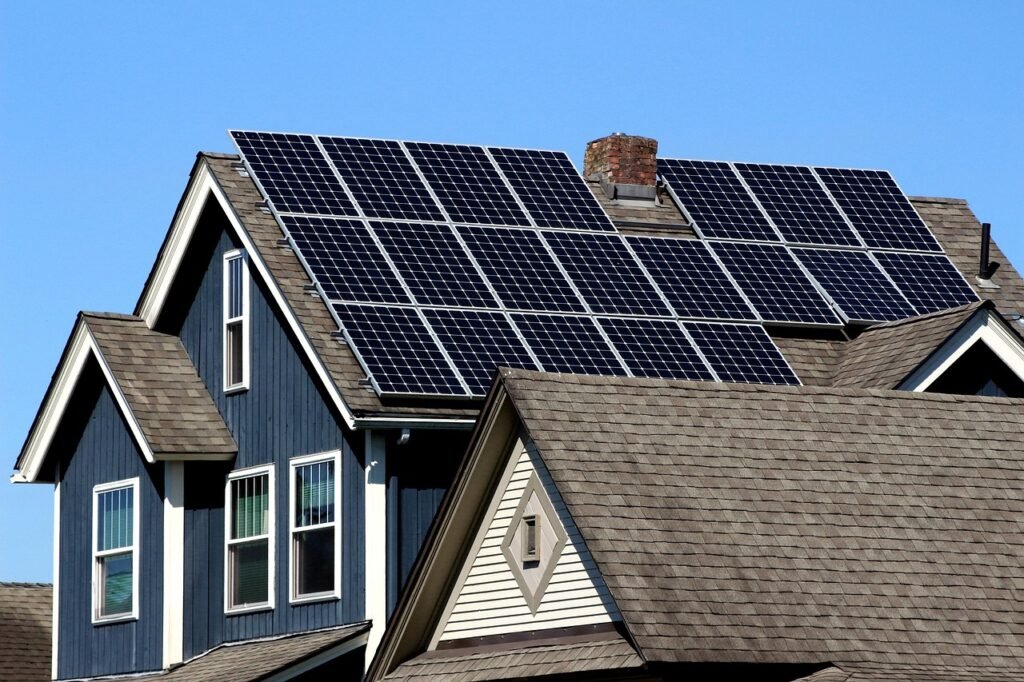
As we move toward a more sustainable future, the smart home acts as a personal power plant. Modern energy management systems can now integrate directly with solar panels and home battery storage.
Maximizing Solar Yield
A smart home can “read” the weather forecast. If a sunny day is predicted, the system might delay running the washing machine until the solar panels are at peak production, ensuring the appliance runs on 100% free, renewable energy rather than drawing from the grid.
Part 6: Getting Started – A Phased Approach
You don’t need to spend thousands of dollars on day one. A sustainable home is built in stages.
- The Audit Phase: Use a few smart plugs to find your most power-hungry devices.
- The Climate Phase: Install a learning thermostat to tackle your biggest energy expense.
- The Automation Phase: Create “Away” routines that shut down lights and non-essential electronics when you leave the house.
Final Thought: Smart Energy, Smarter Living
Smart home energy efficiency is no longer a luxury; it is a practical necessity. By combining technology, data, and small behavioral adjustments, anyone can transform a standard house into a smart, energy-conscious sanctuary. The result is a home that doesn’t just look better, but feels better—both for your bank account and for the planet.
Ready to Learn More?
- Explore our Buying Guides for product recommendations
- Read our Ultimate Smart Home Guide for a complete overview
- Follow our Beginner’s Guide to build your system step by step