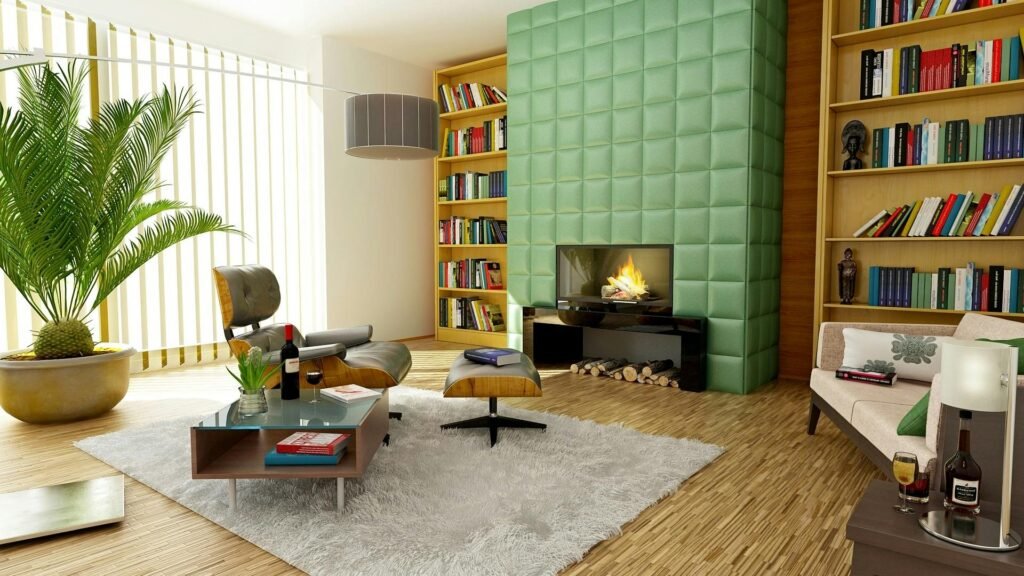
The concept of “Minimalism” in interior design is about stripping away the unnecessary to focus on the essential. In a smart home, this philosophy is taken to the extreme: the technology should be powerful, but it should not be seen.
The challenge with traditional home theaters and stereo systems is the visual clutter—tangles of wires, bulky receivers, and black screens dominating the room. The modern “Inspiration” home solves this with clever design and integrated tech.
The Vanishing Screen The television is often the biggest offender in interior design. A large black rectangle on a white wall can disrupt the entire aesthetic.
- The Solution: Samsung’s “The Frame” TV is a pioneer in this space. When turned off, it displays high-quality art prints, looking like a framed painting. When turned on, it’s a stunning 4K display.
- Hidden Compartments: Custom cabinetry is another trend. TVs can be hidden behind sliding wood panels or even lowered from the ceiling at the touch of a button, revealing the screen only when it’s movie time.
Architectural Audio For the audiophile who hates the look of bulky speakers, architectural audio is the answer. Brands like Sonance and Monitor Audio produce in-wall and in-ceiling speakers that sit flush with the drywall.
- They can be painted to match the wall color exactly.
- The grilles are magnetized and paintable, making them virtually invisible to the eye while filling the room with rich, immersive sound.
Wire-Free Zones Nothing ruins a minimalist vibe faster than a tangle of wires.
- Cord Management: Smart furniture now includes built-in cable management systems.
- Wireless Power: With the advent of long-range wireless charging (like Wi-Charge) and hidden outlets (like the Pop-Out Outlet), you can keep your surfaces clear of charging cables entirely.
A minimalist smart home is a sanctuary. It offers all the convenience of modern technology without the industrial clutter. It proves that a home can be both high-tech and high-fashion.